

In this article, you’ll learn:
- How automatic cold brew systems save time and reduce labour costs
- How to expand your menu with trending drinks
- How combining fresh service with RTD products helps you scale your business
For coffee shops and other foodservice businesses, growth is more important than ever. Consumers are more engaged with coffee than ever, and this is now extending to popular alternatives like iced coffee, cold brew, and matcha as well. This is a double-edged sword, though, as the increased demand means you need more efficient workflows than ever before.
The competition is stiffer than ever, with countless coffee shops all vying for the same customer base in any given area. That means you need equipment that distinguishes you and helps you meet consumer demand quickly and consistently. In this regard, systems that produce automatic cold brew are especially popular.
To learn more about the benefits of automatic cold brew solutions – from business growth to menu innovation and reputation enhancement – I spoke to Lukas Haertel. He is the Head of Quality and Sourcing at WatchHouse, a coffee shop chain with locations in the UK, US, and UAE. Read on for his insight.
How can automatic cold brew systems speed up production?
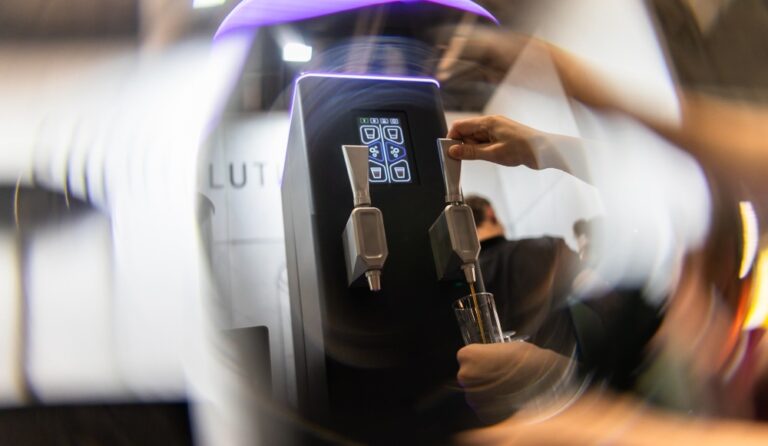
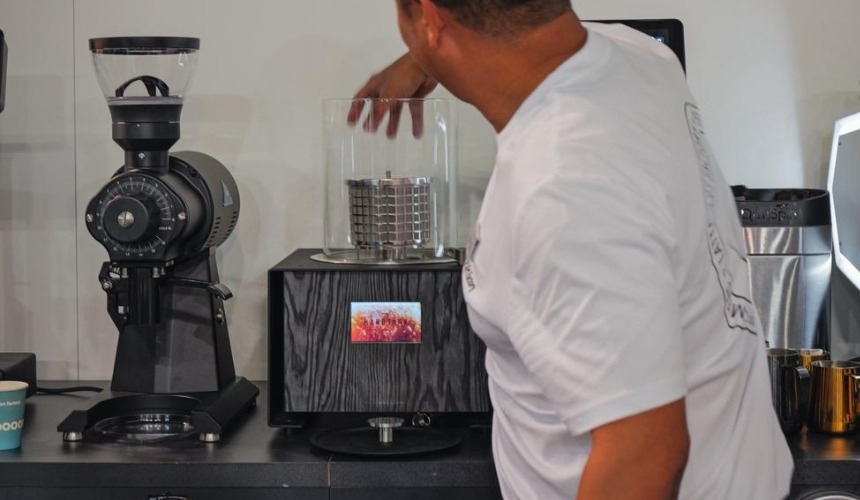
Automatic cold brew machines, like the Baby Hardtank, speed up production by greatly reducing the time it takes to prepare cold brew. Traditionally, it’s a slow process that can take up to 24 hours when coffee grounds are steeped manually. With automatic solutions, however, you can prepare a four-litre serving in less than an hour.
“In terms of service, automated production does two things,” Lukas tells me. “For slower, low-volume coffee shops, they can reduce labour costs by making production passive. It means employees can focus on customer service instead.
“For busy high-volume coffee shops, they raise the revenue ceiling. These systems create an alternative to espresso-based drinks that free up capacity at the espresso machine, which is most commonly the bottleneck in rush periods.”
Evidently, it’s the speed and efficiency of automatic cold brew machines that make them so valuable. They enable you to add cold brew to your menu easily, tapping into the growing market for cold coffee among younger demographics.
Their versatility also means coffee businesses of all sizes can see tangible benefits. As Lukas explains, lower-volume businesses can use them to free up staff while simultaneously preparing drinks in the background. For larger operations, you ensure you’ve always got a fresh portion of cold brew ready to serve to customers during busy periods.
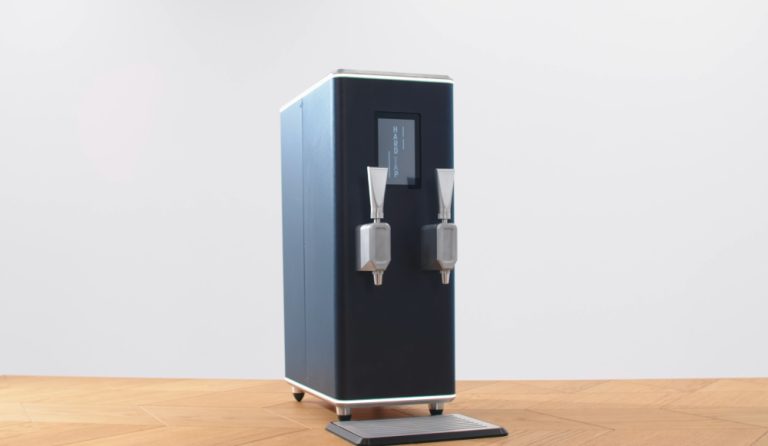
Therefore, systems like Hardtank’s are particularly suited to operators of both sizes. For independent shops or local chains, the Baby Hardtank is suitable because it offers up to 300 portions of cold brew a day. For multi-site businesses that need higher volumes, the Hardtank 20 offers 1,250 portions a day – or higher if you choose a custom size.
Regardless of your size and choice, the benefits are clear. Automatic cold brew systems help you offer new drinks at high capacities without increasing your labour costs. In many cases, operators report up to 50–70% shorter preparation times and an ROI within two to three months due to reduced staffing hours and higher sales volume.
How automatic cold brew empowers coffee businesses to grow
The benefits of automatic cold brew systems are more than just operational – they also empower businesses to expand their customer base, drive sales, and grow.
“I think automated systems like Hardtank help businesses to grow in different ways,” Lukas says. “Firstly, they reduce the labour that’s necessary to produce bigger batches of cold brew.”
This is a key component because traditional methods are imprecise and hard to master. Often, it requires constant attention across the 24-hour steeping period, knowing when to agitate the grounds to extract volatile flavour compounds. With Hardtank’s patented recirculation technology, the system constantly agitates the grounds to speed up extraction and ensure even flavour development.
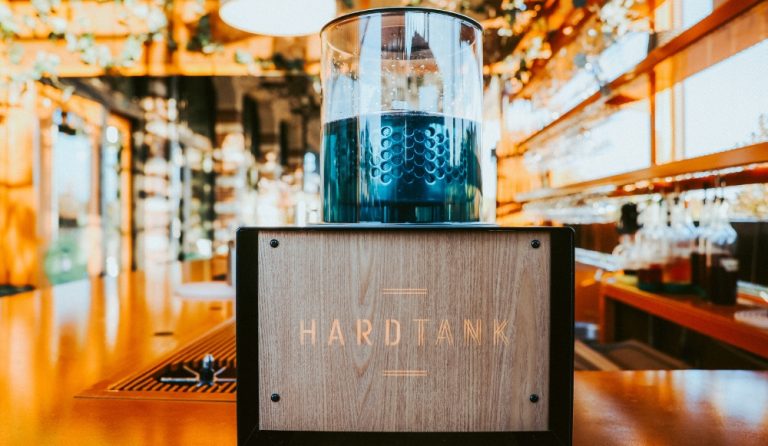
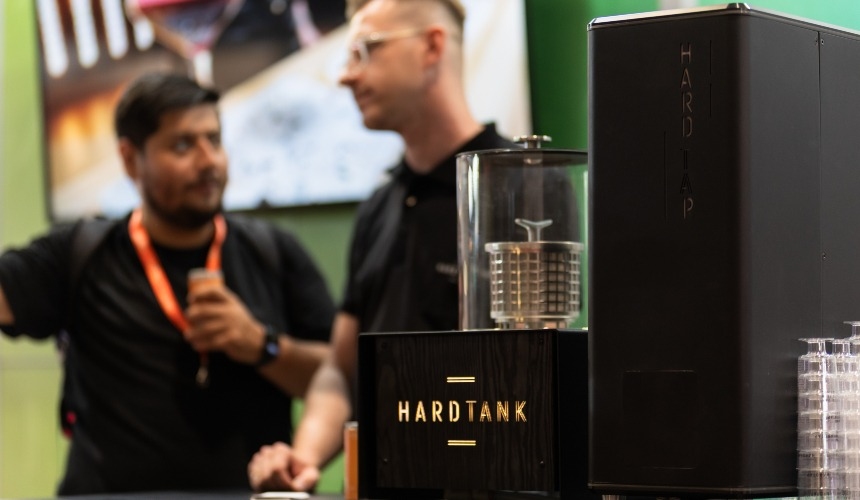
“They’re also visually appealing, which can help sales,” he adds. Customers in coffee shops are typically drawn to visually distinctive countertop equipment, which sparks curiosity and invites questions. In behavioural terms, visible brewing technology creates a “transparency effect.” Customers perceive drinks as fresher and higher quality when they can see the brewing process. With systems like the Baby Hardtank, which comes with a wooden finish and a transparent extraction chamber, you can tap into this element of consumer psychology.
“Lastly, they support the iced beverage category, which is growing thanks to other drinks trends.” The data backs this up, too – the iced coffee market is valued at over $13 billion, with 72% of coffee shops now offering cold drinks. With systems like the Hardtank, which can also prepare iced tea, cascara, and cold brew infusions, you can position yourself as a leader in this emerging market. But for brands ready to take their cold coffee success beyond in-store service, there’s another step.
RTD models: The perfect complement to in-house automatic cold brew
Another way to upgrade your cold brew programme and grow your business is by incorporating a ready-to-drink (RTD) range. By working with private label manufacturers, you can quickly launch canned RTDs that resemble your fresh cold brew but appeal to other consumer touchpoints.
“I think in-house cold brew and RTD products are complementary offerings,” Lukas says. “Fresh cold brew has an inherent issue around shelf life due to how it’s produced. Automatic cold brew systems combat that by reducing brewing time, but the medium is still prone to spilling if the entire batch isn’t used up.”
In this sense, RTDs extend freshness as they remain shelf-stable for up to 12 months. “They fulfil the same purpose of offering an alternative to espresso-based drinks, but are usually ambient, stable products. Customers can take them home or to events, or even buy them in bulk. It makes them a great alternative to fresh cold brew.”
RTDs also have the added benefit of expanding your presence to new consumer touchpoints. While you can stock your RTD cold brew in coffee shops alongside your fresh service, you can also stock them in grocery stores and other retail settings. This helps you capture new customers who may not buy fresh cold brew, giving you yet another revenue opportunity.
Evidently, automatic cold brew systems are the backbone of any coffee business’s expansion plans. They greatly reduce labour and increase efficiency, helping you drive more sales and offer popular drinks. Combined with a complementary RTD system, you can capture audiences across a number of environments to maximise your expansion.
Automatic cold brew systems: Key takeaways
- Automatic cold brew systems boost productivity and reduce labour costs.
- They help businesses of all sizes keep up with growing cold coffee demand.
- Visually engaging systems enhance customer experience and sales.
- RTD cold brew complements fresh service, expanding brand reach and revenue potential.
Ready to invest in your own automatic cold brew equipment? Browse our equipment range here or speak with a member of the team to learn more.
Automatic cold brew FAQ
What are the benefits of automatic cold brew systems?
They help coffee shops significantly speed up their cold brew production. This means you can serve more cold brew throughout the day, and also use the equipment to prepare other drinks.
How fast is the automated brewing process compared to traditional methods?
Automatic cold brew systems can prepare a full batch in under an hour – up to 20 times faster than manual steeping, which typically takes 16-24 hours.
Which automatic cold brew system is best for my operations?
For artisan coffee shops or independent bars, the Baby Hardtank can prepare up to 300 portions of cold brew a day. For larger chains, the Hardtank 20 offers over 1,250 servings depending on the size you choose.
Why should I incorporate RTD cold brew alongside fresh service?
RTD models help you capture consumers who may not buy your cold brew fresh from your coffee shop. This expands your brand visibility and increases the number of consumer touchpoints you can access.
Want to learn more about automatic cold brew?
- Explore our equipment: Learn more about the Baby Hardtank and Hardtank 20.
- Calculate ROI: Estimate your savings with our ROI calculator.
- Talk to our team: Get a free consultation with our cold brew specialists.