
In this article, you’ll learn:
- How the functional coffee market is expanding
- Why functional RTD cold brew is trending among Gen Z and Millennials
- Which ingredients you can include in functional cold brew
- How RTD formats are suitable for your business
- How private label solutions can help you go to market faster
The cold brew coffee sector is constantly evolving, and now, it’s about more than just flavour – it’s also about function. As wellness-driven consumers look for food and drink products that align with their health goals, the fusion of cold brew with enhancing ingredients is reshaping consumer expectations.
One functional coffee market trend is the inclusion of adaptogens and nootropics in cold brew coffee. Once confined to specialist health drinks, these functional ingredients are increasingly popular in ready-to-drink (RTD) coffee formats. Adaptogens are natural substances (like ashwagandha or ginseng) thought to help the body resist stress, while nootropics (like L-theanine or ginkgo biloba) aim to boost brain function, such as focus or memory.
This development creates an opportunity for beverage companies to tap into the high-growth functional coffee markets. To learn more about the ongoing fusion of adaptogens, nootropics, and cold brew coffee, I spoke to Yusuf Amanullah. He is the founder of Unconform, which produces nootropic-infused RTD coffee. Read on for his insight.
How popular are adaptogens and nootropics becoming in the functional coffee market?
The appetite for functional drinks is surging, and for coffee businesses, combining this with cold brew is particularly effective. Currently valued at USD $233 billion globally, the functional beverage market is growing at a rate of 6.46% each year. As such, the scope for functional coffee market development is vast.
This expansion is driven in large part by rapidly changing consumer behaviour, particularly among Millennials and Gen Z. More than ever before, these younger generations want drinks that enhance their mental performance, reduce stress, and align with health-conscious routines.
For this reason, it’s no surprise that cold brew – a drink already popular with young demographics – goes hand-in-hand with functional ingredients.
“Like the rest of the food and beverage industry, the addition of functional ingredients like adaptogens and nootropics is a hot trend in cold brew,” Yusuf tells me. “We can see it becoming a lot more mainstream, seeing it in stores and cafés as an additional option, the way alternative milks were previously.”
In its RTD drinks, Unconform uses:
- Ashwagandha – to reduce stress
- Ginkgo biloba – for memory, dementia, and depression
- L-theanine – to boost energy without crashes
- Ginseng – for its antioxidant properties
The fusion of these wellness-focused ingredients with cold brew coffee is an effective strategy. It pairs traditionally popular caffeine drinks with natural stress-relievers and brain boosters, which creates a balanced energy source with valuable health claims.
The functional coffee market is already breaking into the mainstream. Functional cold brews are now common among RTD coffee businesses, and appear frequently at health-focused retailers.
Yusuf sees this as a permanent shift in how cold brew is perceived and the impact it can have. “It’s very clear that people are more aware of what they put in their bodies,” he says. “As such, they’re asking the question, ‘Why not in my coffee too?’”
The benefits of incorporating adaptogens and nootropics into RTD cold brew coffee
For FMCG businesses expanding their RTD range, there are several strategic advantages to incorporating adaptogens and nootropics to target the functional coffee market. They help you diversify your product range, appeal to rapidly evolving demands, and drive commercial growth.
First and foremost, this fusion allows you to stand out from competitor brands and offer a completely unique value proposition to customers. While standard RTD cold brew is increasingly common, offering distinctive ingredients and health benefits distinguishes you from other brands. Rather than a regular vanilla or mocha cold brew, offering coffee enhanced with lion’s mane, for example, provides flavour as well as a focus boost.
Equally, the data proves that the functional coffee market is only going to increase. In the last decade, cold brew’s popularity has shot up by a staggering 300%, with the clean-label market also growing by 8% each year. The two trends go hand in hand because it’s the same demographics that are driving both. Gen Z consumers generally care more about food health than other generations, and will pay more for healthy products.
For this reason, it’s no surprise that health benefits and cold brew go hand-in-hand. By meeting these demands – such as with RTD cold brew infused with L-theanine – you’re appealing to two consumer trends at once.
It rapidly expands your scope for profit and market growth, as well. On average, consumers are willing to pay over 30% more for products with tangible health benefits and verified claims. With clear labelling and wellness-focused ingredients, you can justify higher prices and even increase your profits.
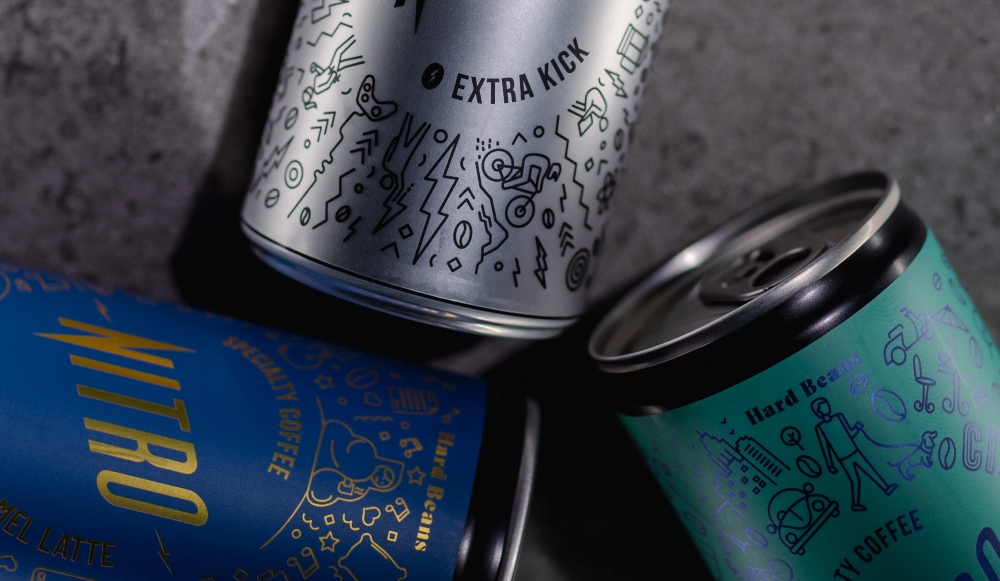
These reasons all factored into Unconform’s RTD functional cold brew launch. “We saw a massive opportunity to be the first of our kind, blending flavour and function in a ready-to-drink format,” Yusuf explains. “RTD coffees are on the rise, as are nootropics, so it was a no-brainer to add both together.”
It’s also essential to evaluate how these ingredients impact shelf life and sedimentation. For instance, powder-based adaptogens may separate over time if not properly emulsified or stabilised. This is why formulation expertise is key.
That said, it’s just as important to preserve the coffee’s quality when adding active ingredients. It requires careful formulation to preserve cold brew’s naturally smooth mouthfeel and distinctive flavour notes. “What’s out there right now is full of nasty ingredients and sugar, more like a milkshake that’s coffee-flavoured than an actual, sophisticated coffee drink,” Yusuf says.
Private label RTD companies are one path to market for FMCG brands launching functional cold brew. By working with an experienced partner, you can rely on their existing flavour testing and regulatory compliance to streamline product development.
Similarly, you can lean on your manufacturer’s expertise to determine the best ingredients to include and health benefits to target. With several rounds of feedback and formulation adjustments, FMCG brands can fine-tune their functional cold brew so it’s suitable for the fast-developing market.
How else will the RTD coffee sector evolve?
While adaptogens and nootropics are driving the current wave of functional coffee market trends, the future is even more expansive. Therefore, establishing the processes and key selling points of your functional cold brew now is essential for future-proofing your business.
One key area of development is the diversification of popular flavours. “We’re seeing more fruit-flavoured coffees coming through, which is an interesting mix,” Yusuf says. For premium RTD coffee, this can hugely expand your product range. From citrus-infused cold brew to canned nitro cold brew, you can tap into trending flavours and attract customers with a range of tastes.
Additionally, the cold brewing method is being applied to other products. “We’re seeing the actual process becoming mainstream in other areas, like tea, to bring out the flavour profile of the actual tea leaves,” he adds. This gives existing RTD cold brew businesses the scope to expand into a range of other sectors to attract new customers.
For FMCG companies navigating this next chapter, agility and scalability will be essential. As Yusuf’s experience shows, the functional coffee market and RTD formats are only going to increase in popularity – so optimising your operations now is the key to future success.
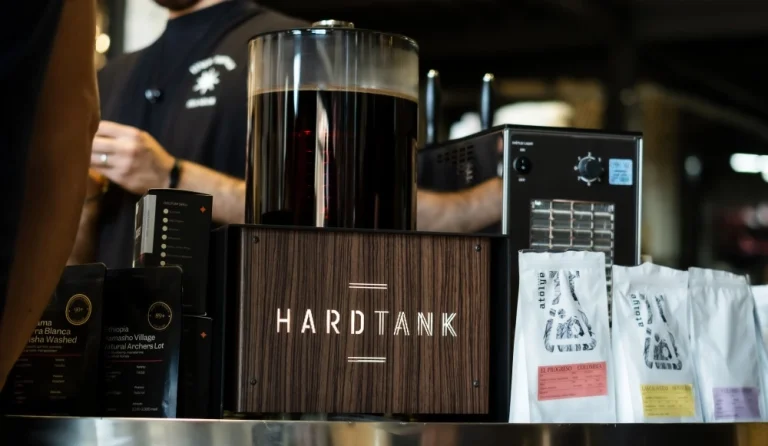
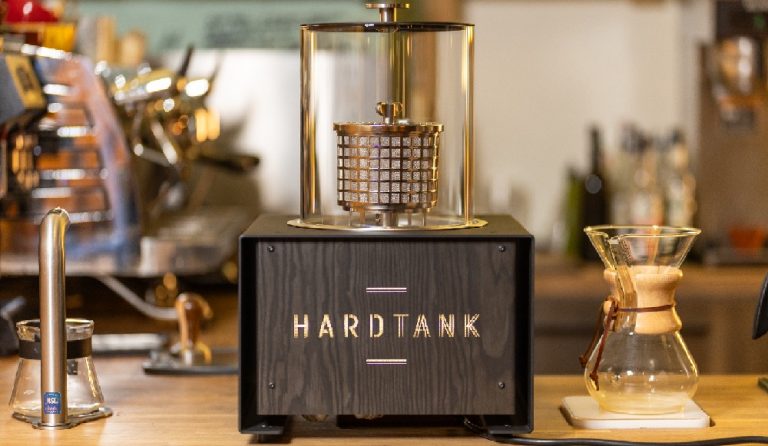
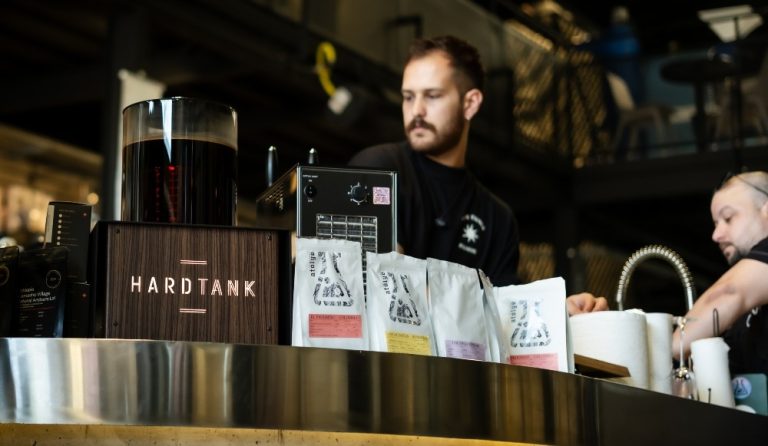
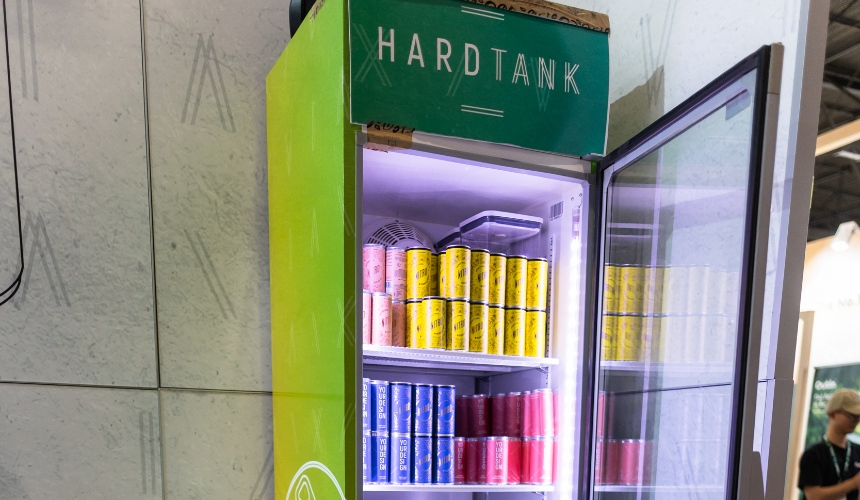
Private label solutions such as Hardtank’s can help brands launch shelf-stable functional cold brew with speed and efficiency. With custom formulation and full-scale manufacturing and canning, you can tap into the functional coffee market to resonate with modern consumers.
Functional coffee market: Key takeaways for FMCG businesses
- Functional cold brew is a rapidly expanding segment that provides significant scope for customisation.
- Younger demographics particularly value RTD drinks that align with their health goals.
- Private label solutions help businesses launch functional cold brew quickly and with full compliance.
Ready to offer RTD functional cold brew? Visit our website to learn more or schedule a free consultation.
Functional coffee market FAQ
How are adaptogens and nootropics used in cold brew coffee?
Natural ingredients like ashwagandha and ginseng are added to cold brew coffee to relieve stress. Since cold brew is already popular with young, health-conscious consumers, it offers them both a caffeine boost and additional wellness benefits in one format.
How big is the functional coffee market?
The functional coffee market is steadily growing, and cold brew is already incredibly popular with Gen Z and Millennials. Therefore, combining the two provides an avenue for growth.
How can FMCG brands get started with functional cold brew?
Working with a private label manufacturer is a faster route to market, since they already have experience with formulation, compliance, and manufacturing.
Want to learn more about our private label beverage services?
- Discover more: Read about Hardtank’s RTD services here.
- Hear from experts: Watch our webinar on developing custom RTD beverages.
- Book time with the team: Schedule a free appointment here.