
In this article, you’ll learn:
- How cold brew systems support commercial growth
- Why offering both fresh cold brew and RTDs is optimal
- What to look for in your cold brew systems
As cold brew and iced coffee become more of a menu staple, it’s essential for coffee businesses to adapt. Generally, you have two options: to produce cold brew freshly in-house, or to launch a ready-to-drink (RTD) cold brew product. But are cold brew systems commercially viable for all businesses, or do alternatives exist?
The answer depends less on the system itself and more on the strategy surrounding it. For some, handling production in-house provides control and adaptability. For others, combining in-house production with structured private label partnerships offers a more flexible pathway to scale.
To learn more about the cold brew coffee maker commercial landscape, I spoke to Jason Scalzo. He is the co-founder and CEO of Venturi Bold Brew, an RTD cold brew brand based in Georgia, USA. Read on for his insight.
Are cold brew systems commercially viable for RTDs?
For drinks brands launching their own cold brew coffee, dedicated brewing equipment is vital. However, the type of equipment you choose depends on your market positioning and key SKUs.
For Jason and Venturi Bold Brew, a vertically integrated model, controlling the entire process, was the most suitable strategy. “Venturi Bold Brew is a start-up cold brew RTD retail brand that prides itself on entering the market vertically integrated,” he tells me.
“The investment into our own cold brew equipment has allowed us to apply our patented nitrogenation device to each keg and can we produce, while gaining the necessary insight of our projected yield, inventory sourcing, and profit margins, down to the unit.”
Vertical integration can be commercially beneficial when backed by sufficient investment, technical expertise, and operational discipline. Without that foundation, though, it can lead to inefficiencies that may impact your profit margin.
For this reason, drink brands often work directly with private label manufacturers to produce RTD cold brew. Rather than fully owning extraction, nitrogenation, canning, and distribution infrastructure, many brands use commercial cold brew systems for fresh service innovation. Then, they partner with specialist manufacturers for scaled RTD production.
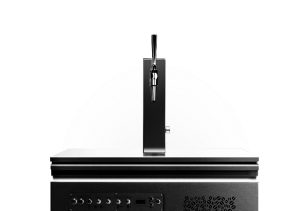
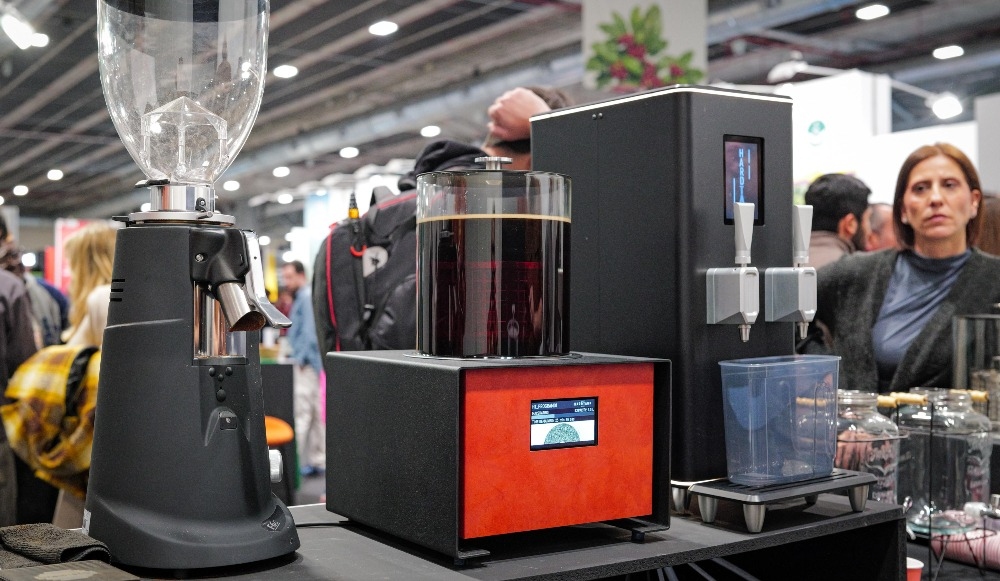
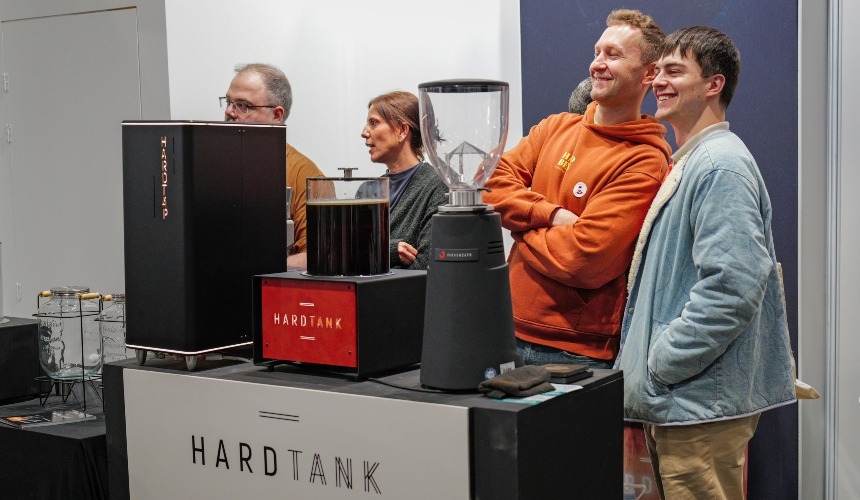
For instance, Hardtank’s private label and custom formulation services are structured precisely around this hybrid model. You can use dedicated cold brew equipment like the Hardtank 20 to prepare up to 250 litres a day for on-site orders. Then, you can produce private label RTDs with low minimum order quantities (MOQs) to address off-site demand.
In this sense, a cold brew system consisting of equipment and RTDs is commercially beneficial not only as a production tool, but also to bridge the gap between fresh service and retail. In turn, you can position yourself across numerous consumer touchpoints to drive sales.
What should you look for in cold brew coffee systems?
When choosing your cold brew coffee equipment, you should prioritise consistency, scalability, and process control.
“Prior to launching the brand, we first needed to verify that we can replicate the product experience, from the tap, inside the can,” Jason says. This is essential because if your RTDs taste different across SKUs or production batches, it may turn consumers away from repeat purchases. They want consistency in flavour and mouthfeel – not surprises.
“The key feature that has been most critical is the consistency of the product, from flavour, texture, and brix,” Jason says. The latter metric refers to the total dissolved solids in the cold brew, including sugar, which is important to control for labelling compliance and consumer demands for low-sugar drinks. “The equipment has allowed us to monitor and adapt to ensure our customers get what they are expecting,” he adds.
Consistency across flavour, nitrogen infusion, and texture is a non-negotiable – both for consumer-packaged goods (CPG) and fresh service. Your commercial cold brew equipment should allow you to monitor and adjust the extraction process where necessary to ensure consistent results.
However, speed and production scalability are also important as your cold brew strategy evolves. “Our equipment allows us to streamline manufacturing efficiency and scale our production capacity to four times the original yield,” Jason explains. “This cuts down on production costs and scheduling gaps that are critical for us, since we’re still accumulating the data needed to properly forecast.”
Evidently, finding efficient ways to scale output without sacrificing quality is central to increased profitability. However, this in-house infrastructure, particularly for RTD production, can require significant investment in canning lines, quality assurance systems, and compliance management.
Therefore, many coffee businesses, especially those transitioning from hospitality into retail, work with RTD manufacturers to mitigate risk. Since start-ups need to navigate obstacles like shelf-life requirements and food safety regulations, partners can share their experience to streamline these processes.
For instance, Hardtank’s private label services include formulation, canning, and logistics. This allows brands to focus on marketing and sales rather than the complexity of product engineering.
Hygiene is another very important factor for cold brew businesses. Since cold brew is prepared without a heat-killing step, it can be more susceptible to microbial growth if hygiene controls are not carefully managed. Your equipment needs to be made from food-grade stainless steel, and preferably should include automated cleaning systems to minimise human error.
Versatility shouldn’t be overlooked, either. Systems like the Hardtank 20 are also capable of preparing iced tea, cocktails, and botanical infusions alongside cold brew coffee. This allows businesses to experiment with new flavours and future RTD SKUs without investing in additional equipment.
Ultimately, your choice of commercial cold brew system should align with your growth model. If you’re focusing on speed, compliance, and versatility, it can be more cost-effective and faster to work with a structured private label partner. To own the entire process, however, investing in cold brew systems and facilities can be beneficial.
How should businesses start with RTD production?
For businesses going to market with RTD cold brew, like Venturi Bold Brew, investment and planning are two main considerations.
Launching an RTD product requires more than a good recipe. You should also address the repeatability of your formulation across batches, food safety compliance, packaging design, distribution logistics, and scalability.
“First, the main thing is not to go to market under-capitalised,” Jason advises. “RTDs often have complex supply chains, both in manufacturing and distribution, which can result in unplanned costs.
“Second, start now on implementing standard operating procedures (SOPs) for every aspect of the business: production, QA, inventory management, sales ops, and accounting. The investment into efficiency at this point will prepare the brand to scale responsibly.”
While vertical investment may be suitable for established brands, challengers or emerging businesses can work with private label manufacturers as a reliable entry point. Rather than building extraction, nitrogenation, and canning capabilities internally, you can leverage proven systems while retaining control over branding and, in the case of custom formulation, recipe ownership.
Hardtank’s model, for example, offers both ready-made and custom formulations. With pre-validated formulations, you can significantly reduce your time to market, while custom development allows you to own recipes without managing the technical burden of scaling and compliance.
In practice, many successful brands adopt a blended strategy to commercial cold brew production. They may use specialised cold brew equipment for fresh service and on-site sales, while a private label partner handles large-scale RTD production.
So, is a cold brew coffee maker commercially beneficial? It can improve operational efficiency and expand your menu innovation capacity. Within a broader strategy that includes private label products, it becomes a strategic asset that helps you scale sustainably.
For coffee businesses evaluating the next stage of growth, the decision is not simply whether to buy equipment. It’s whether to own every stage of production, or to combine in-house expertise with specialist manufacturing partners in a way that preserves your profit margins.
Cold brew systems: Key takeaways
- Commercial cold brew systems can be beneficial, but they need to align with your growth strategy.
- A combination of brewing equipment for fresh service with RTDs is effective to appeal to a range of consumer touchpoints.
- Working with private label manufacturers can reduce risk and speed up time to market for emerging drink brands.
Ready to explore our cold brew systems? Learn more about our equipment here and contact the team to get started.
Cold brew systems FAQ
Are commercial cold brew systems worth the investment?
For drink brands with ambitions to scale production and expand into retail, commercial cold brew systems can be beneficial. They allow you to prepare fresh cold brew to serve customers daily, as well as sourcing RTDs for off-site retail purchases.
Can cold brew systems support drinks beyond coffee?
Yes, equipment like the Hardtank 20 is capable of producing tea, botanical infusions, and cocktail bases to increase your versatility.
What matters most in a cold brew system?
Features like consistency across batches, hygienic compliance, and scalability are the most important elements when sourcing equipment or producing RTDs.
Want to learn more about our cold brew systems?
- Discover our RTD services: Explore the process here.
- Choose your equipment: Browse our range of cold brew machines.
- Speak to a specialist: Contact the Hardtank team.