
In this article, you’ll learn:
- Why working with a cold brew private label manufacturer is beneficial
- How RTD cold brew is becoming more popular
- How you can save money and time with a private label partner
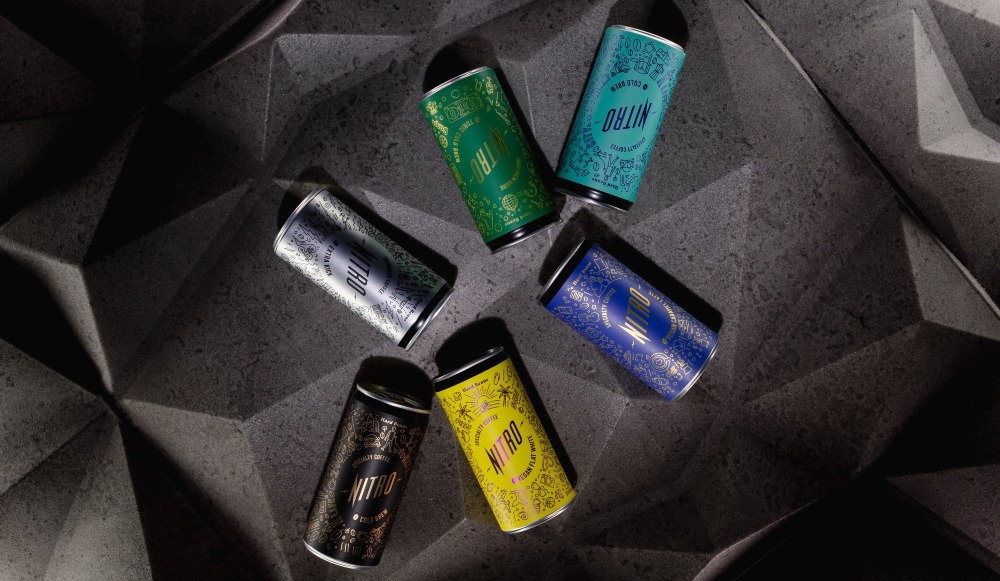
Cold brew has gone from a minor trend to a leading drink in the cold coffee sector. For coffee shops, bars, and restaurants, it’s now a key menu item alongside iced lattes and hot coffee. That said, there’s even more potential for growth – particularly by offering ready-to-drink (RTD) cold brew.
As a complementary offering alongside fresh service, working with a cold brew private label manufacturer helps you to sell drinks outside of your coffee shop. It opens up the potential for grocery store positioning, wholesale orders, and e-commerce revenue – but how should you choose your private label partner?
To learn more about what to look for in a cold brew private label manufacturer, I spoke to Ignacio Vago. He is the founder of Confidente Café, a nitro cold brew business based in Buenos Aires, Argentina. Read on for his insight.
How popular is canned RTD cold brew with consumers?
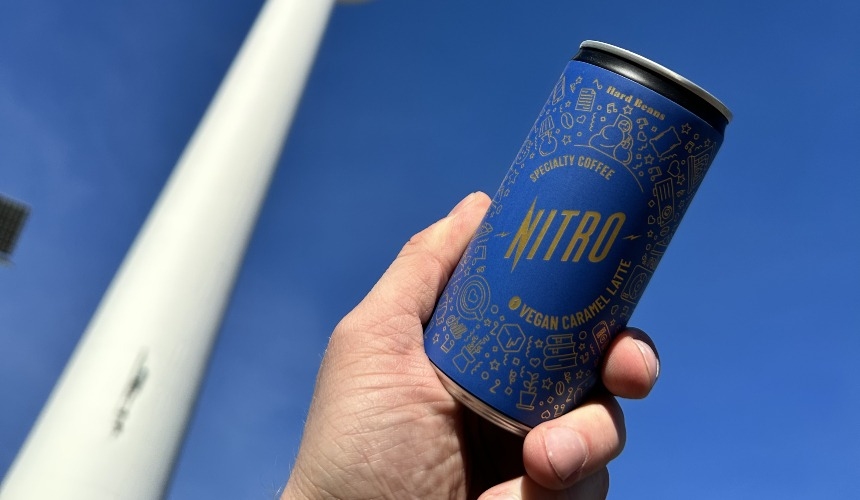
It’s worth working with a cold brew private label manufacturer because RTD cold brew is more popular than ever with consumers.
Particularly in the United States and much of Europe, cold brew’s smooth mouthfeel, low acidity, and naturally sweet taste have made it a favourite. Over 35% of all cold brew globally is sold in North America. In the United Kingdom, the number of retail stores and foodservice outlets selling cold brew increased by 140% from 2023 to 2024, proving that it’s here to stay.
This expanding retail presence goes hand-in-hand with the rise of convenient, ready-to-drink formats. Convenience has become a significant demand in the past decade, with 44% of consumers deeming it a top priority when making a purchase.
Canned cold brew simultaneously meets both of these requirements. It addresses the rising demand for smooth, low-sugar cold brew, but it’s also a convenient way for customers to enjoy your drinks.
“RTD cold brew started as a global trend, but today it’s clearly solidifying into a real, long-term category,” Ignacio tells me. “At first, consumers were drawn to it for its freshness, convenience, and novelty.
“Over time, however, the appeal has shifted towards functionality: sustained energy, smoother caffeine delivery, lower acidity, and formats that fit modern, on-the-go lifestyles,” he says.
“The numbers support this shift,” Ignacio continues. “In major markets like the USA, both iced coffee and cold brew in RTD formats continue to grow steadily, with Gen Z and younger millennials leading adoption.”
However, this presence is expanding into new regions as well. “What’s even more interesting is how this trend is now expanding into Latin America,” he says. “Countries like Brazil, Chile, and Argentina are beginning to show clear signals of category formation.”
Therefore, canned RTD cold brew is fast becoming a pillar of modern coffee businesses. “RTD cold brew is no longer just ‘something new,’ but rather a product that fits evolving consumption habits globally,” he says.
Why should roasters launch their own RTD cold brew?
For roasters, entering the RTD cold brew market is a long-term strategic expansion. Offering canned cold brew helps you attract customers in new settings: as they travel, in grocery stores, or online. It can act as a supplemental offering alongside your barista-led cold brew service, fitting into modern consumer demands without sacrificing flavour and quality.
This can also function as a new way to boost your margins and brand equity. Rather than relying solely on café visitors, they offer new channels for revenue, including direct-to-consumer sales, retail positioning, and wholesale distribution.
For roasters in emerging markets, however, Ignacio advises a more methodical approach when launching your RTDs. Success may not be as instant in these regions, but the opportunity to become a market leader is vast.
“In emerging markets, success won’t come from having the best product on paper, but from being able to communicate why the product exists and what role it plays in people’s lives,” he says. “In markets that aren’t as mature as the US, the challenge is education and habit-building.”
This means that your newly-launched RTD cold brew should come with plenty of information to give new consumers the context they need. “Brands need to explain when to drink cold brew, why it’s different from iced coffee, and the functional benefits it brings,” he adds.
By combining high-quality cold brew with clear storytelling and thought leadership, you can quickly become a leader in this emerging category. “Community matters,” Ignacio says. “The brands that win tend to build a culture and identity around when, where, and why their cold brew is consumed – not just how it tastes.”
What are the benefits of working with a cold brew private label manufacturer?
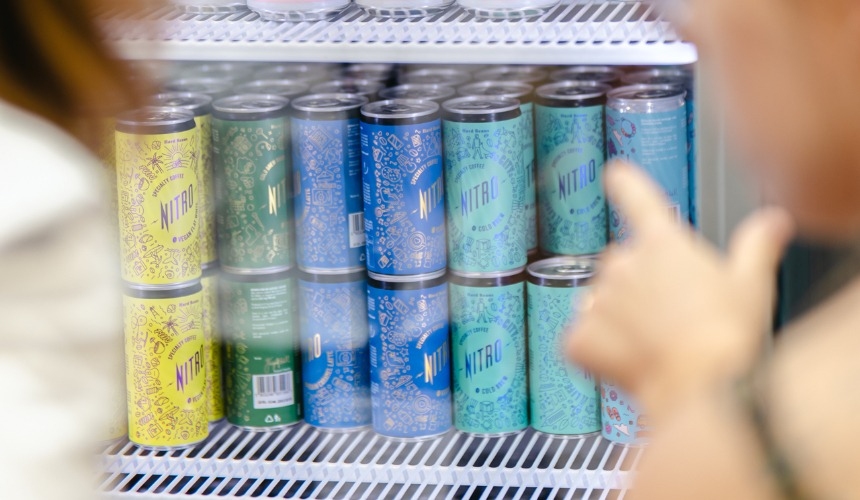
Working with a cold brew private label manufacturer helps you streamline complex processes like formulation, food safety compliance, canning, and distribution. Managed in-house, these processes can be time-consuming and expensive, delaying your product launch and potentially cutting into your profits.
“Working with a private label or co-manufacturing partner can significantly lower the barrier to entry, accessing specialised infrastructure as well as safety and technical expertise – all the while reaching the market faster,” Ignacio says.
“For many roasters, this model allows them to focus on what they do best – sourcing coffee, defining flavour profiles, and building a brand – while relying on experienced partners to handle production complexity.”
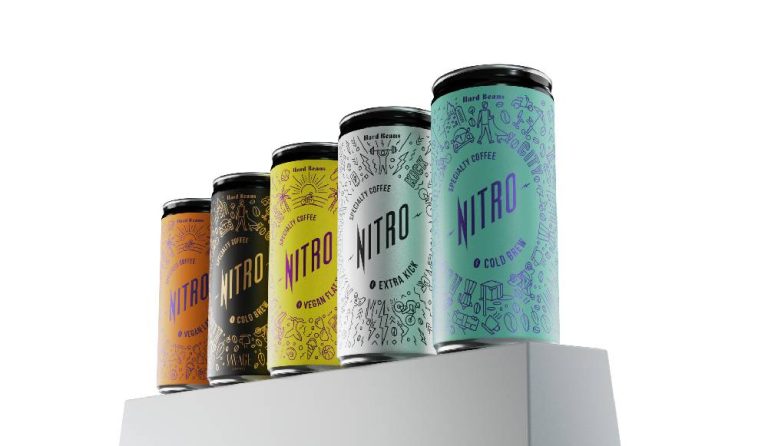
Cold brew private label programmes are therefore designed to remove bottlenecks to speed up your RTD product launch. Manufacturers like Hardtank offer shelf-ready and fully custom formulations, meaning you can prepare a bespoke cold brew RTD and retain ownership of the formula as you scale up production.
Private label manufacturers often offer testing and rounds of feedback, meaning you can tailor the drink exactly to your expectations. This offers you more flexibility than producing RTD cold brew in-house, since you can rework your formulation and make adjustments without having to start from the beginning.
As such, working with a cold brew private label manufacturer is the most efficient way to launch a new RTD. You can still tap into key consumer demands without the financial risk associated with doing so in-house. Our lead times are as little as six weeks after formulation approval, meaning you can go to market with speed and operational confidence.
Ultimately, the ability to rely on a manufacturing partner for regulatory compliance, shelf-life testing, and logistics means fewer distractions and more confidence at launch. As RTD cold brew continues to grow in popularity, being able to launch new products with agility and efficiency is vital.
Cold brew private label: Key takeaways
- Canned RTD cold brew has become a long-term growth opportunity, combining convenience, functionality, and trending drinks.
- Private label manufacturing lowers the barrier to entry, allowing roasters to enter the market without investing in production and compliance facilities.
- For roasters, you can expand your presence outside of coffee shops into new channels like grocery stores and e-commerce.
Want to launch your own private label cold brew RTDs? Learn more about our process here or contact the Hardtank team for a free consultation.
Cold brew private label FAQ
Why should roasters launch a cold brew RTD?
Adding an RTD to your range allows you to sell coffee outside of your physical locations, such as in grocery stores or online. As a result, you can reach new consumer touchpoints and strengthen your brand visibility.
What should I look for in a cold brew private label partner?
You should choose a manufacturer that provides rounds of testing and quality control, as well as the ability to launch custom formulations. It’s also important that you retain ownership of your recipe so you can scale up your production in the future.
How long does it take to launch an RTD cold brew?
It varies based on the manufacturer you choose, but Hardtank offers a lead time of six weeks following formulation approval.
Want to learn more about our private label cold brew?
- Explore our process: Learn more about our private labelling here.
- Browse our products: Look at our shop-to-go formulations here.
- Speak to an RTD specialist: Contact a member of the Hardtank team.