
In this article, you’ll learn:
- How to choose flavours and ingredients that reflect your brand and sell
- Why aluminium cans are the best choice for shelf-stable, sustainable iced tea
- How smart packaging design helps your product stand out and communicate value
For businesses looking to launch a private label iced tea brand, preparation is essential. It’s a long process that requires a number of considerations, from product formulation to testing, packaging design to actually launching your products.
Each stage requires its own strategy – and finding proven solutions to streamline the process can save time and costs. Equally, consumer expectations of private label iced tea are different to those of RTD coffee, so you need to take these specifics into account.
To explore how successful small tea brands approach private label production, I spoke to Nikki Van Warner. She is the co-owner of Appalachian DiviniTEA, which sells loose-leaf tea as well as RTD iced teas. Read on for her advice.
Tip #1. Determine your flavours and ingredients early
First and foremost, Nikki recommends you choose your private label iced tea products based on customer trends and feedback. Given the investment required to launch a new SKU for the first time, you need to conduct research to choose flavours and ingredients that will drive sales.
“We reviewed our sales of loose-leaf teas and decided the best ones to can would be our best-selling loose leaf blends,” she tells me. “We ended up choosing two herbal blends and two mushroom blends. They are all caffeine-free, because we knew our customer base would prefer these options.”
Nikki emphasises something crucial for private label iced tea: conducting product and flavour formulation with consumers in mind. Failing to do so could result in you launching a drink that is starkly different to your existing loose-leaf tea blends in flavour profile. As such, even customers familiar with your brand and products may not purchase the new product.
In this regard, private label manufacturing partners can be particularly helpful. Companies like Hardtank assist you in determining your flavour profiles and ingredients, and then offer up to three rounds of feedback before finalising your formulation.
This ensures that your RTD drinks accurately represent your core target flavours, giving customers the same taste as your loose-leaf tea in a can. Without knowing your ideal ingredients well in advance, this testing phase can become more complicated if you need to make changes. “Research and development are crucial to get the taste right for canning,” she says.
Tip #2. Choose shelf-stable formats and reliable partners
The next step for your private label iced tea is choosing partners that work for you. Often, tea companies will work with third parties to prepare and manufacture their RTD drinks. This is often a more cost-effective measure than investing in your own production and canning facilities.
“Wehrloom Honey reached out directly to us for collaboration on our iced tea cans,” Nikki tells me. “They have their own canning facilities and were already crafting mead and sodas, and wanted to add tea to their lineup.”
While local solutions like these are convenient for speeding up production times, these partnerships may not be possible for all tea businesses. Often, they will work with dedicated private label manufacturers who take the drink formula, prepare it in bulk, and package it in cans ready for distribution.
“They take our loose-leaf tea, brew and sweeten it with their raw honey, and then can it at their facility,” she says. “We order based on our market schedule, as most of our sales are direct to consumer – at farmers markets and festivals throughout the year.”
Factors like minimum order quantities and lead times can vary based on your supplier. If you’re launching private label iced tea based on trending ingredients, like adaptogens and nootropics, shorter lead times enable you to go to market faster. For example, Hardtank offers lead times of four to six weeks after design approval, helping you launch products quickly.
In this stage, you also need to determine the formats and SKUs that are best for your private label iced tea. Common choices include bottles made from plastic or glass, as well as cans made from aluminium.
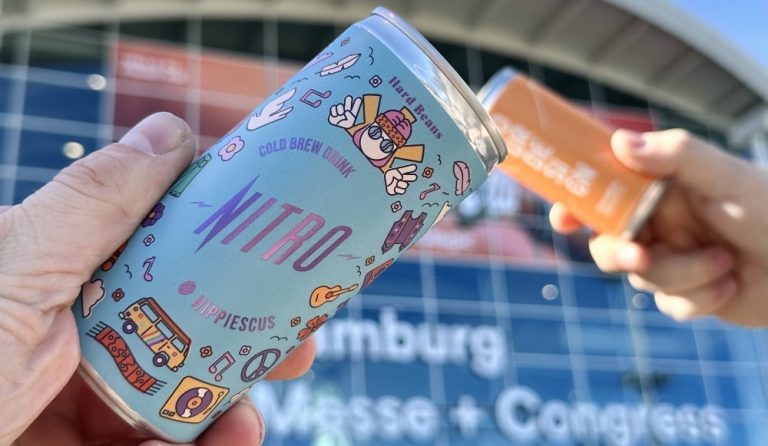
Appalachian DiviniTEA uses cans for its RTD iced tea, which is one of the most common choices of format. Not only are cans a physically robust and durable format, but they are also food-safe and easily recyclable. It also helps maintain consistent flavour and safety over months of storage – essential for retailers and direct-to-consumer sales.
Tip #3. Design with intention
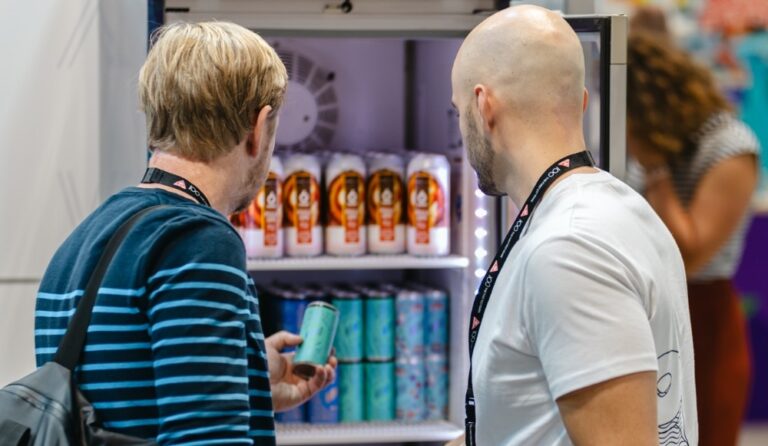
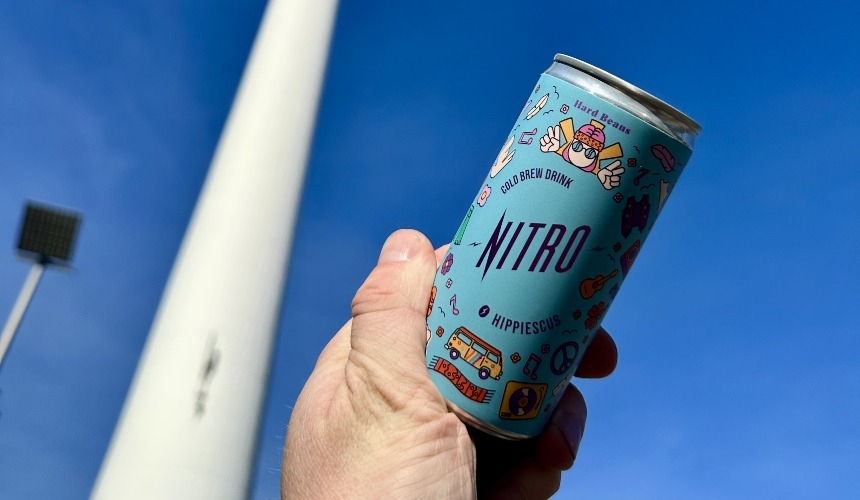
Once you’ve determined the flavours, formats, and manufacturer of your private label iced tea, you need to consider the product’s visual design. The average consumer spends just three seconds looking at a product on retail shelves, so your design is crucial. It’s not just enough to stand out – it also needs to instantly communicate your identity and flavour notes to entice customers.
“The owner of Wehrloom Honey, Aron Wehrloom, went to school for graphic design before starting their company, so he designs the can labels,” Nikki says. “They are beautiful and have a lot of information incorporated on the cans.”
Its 12 fl. oz. cans feature a silhouette of a bee, representing the honey infused into the iced tea. The labels also feature Appalachian DiviniTEA’s logo, an organic-inspired coarse design, and colours representing the drink’s flavour notes.
“Sharing what the ingredients are good for, especially with herbal and mushroom teas, is important,” she adds. “It helps the consumer make an informed decision regarding functional and wellness beverages.”
Design flexibility is therefore a major advantage. You want your RTD cans to clearly communicate the ingredients and flavour notes, while also tapping into your brand’s unique identity. Partners like Hardtank allow you to add custom labels to your private label iced tea, achieving both formulation and branding goals.
Evidently, the considerations for private label iced tea are vast and multi-layered. You need to determine flavours, formulations, and formats that align with customer demands. Also, you need to design your drinks to be visually appealing. By taking these factors into account, you can launch drinks that resonate with your audience and align with your goals.
Private label iced tea: Key takeaways
- Analyse customer preferences and existing sales data to guide flavour development.
- Choose durable, shelf-stable formats like aluminium cans.
- Work only with trusted private label partners for consistent quality.
- Design your packaging to align with your brand and highlight functional benefits.
Ready to launch your own private label iced tea? Visit our private label services page or speak with a member of the team to learn more.
Private label iced tea FAQ
How should I decide which flavours to launch first?
Look at your sales data and launch private label iced tea based on the best-selling flavours and blends. Then, you can expand more widely with other flavours as you scale up.
What is the best packaging format for private label iced tea?
Cans made from recyclable aluminium are particularly suitable because they are shelf-stable, durable, and lightweight.
What should I include on private label iced tea labels?
You should list your ingredients and flavour notes, as well as any health benefits your tea has. You can also include visual elements like icons, descriptions, or colours to align your private label tea with your other products.
How much does it cost to launch private label iced tea?
Costs depend on formulation, packaging, and order quantity – but partnering with a private label manufacturer reduces the need for costly equipment or large-scale facilities.
Want to learn more about private label iced tea?
- Learn more: Explore our full private label process.
- Browse our range: Discover what flavours and formats are available.
- Book a free strategy session with an RTD expert: Contact our team here.