

In this article, you’ll learn:
- The key differences between RTD beverages and fresh service models
- The operational advantages of RTDs for growing businesses
- How ready-to-drink formats support scalable growth and consistency
- What to consider when launching RTD drinks
- How RTDs align with convenience trends and multi-channel distribution
For drinks brands expanding their market presence and attracting new customers, the right growth strategy is crucial. It depends on your operational setup, customer demands, and your desire to scale as you grow. However, deciding the right model is essential to establishing your brand identity and optimising your workflows.
As such, beverage companies need to decide between the two primary growth models: launching RTD beverages or offering fresh service in-house. Each one requires different equipment, infrastructure, and expertise. That said, the benefits of identifying the model suited to your business are vast.
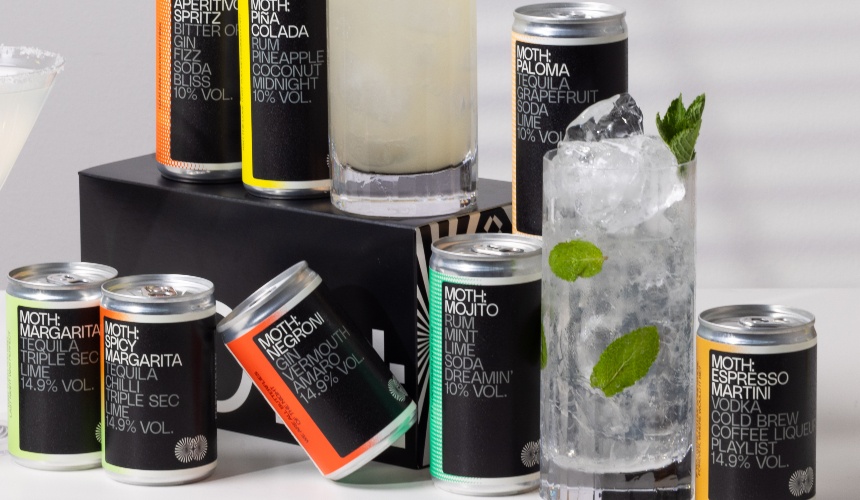
To learn more about the decision between RTD beverages and fresh service, I spoke to Rob Wallis. He is the co-founder of MOTH Drinks, a UK-based company specialising in RTD cocktails. Read on for his insight.

What are the benefits of offering RTD beverages over fresh service?
Rob chose to offer RTD beverages instead of fresh service for MOTH’s product line due to the speed and agility the model offers.
“There are some great benefits of offering an RTD over fresh service,” he tells me. “Many of the benefits help with speed of service and consumers when hosting at home.”
Product consistency is one of the major advantages. “We spend time ensuring that each of our classic cocktails is true to the taste and strength of the same cocktail you’d find in a local bar,” he says. “Consumers can expect consistency every time, whether they’re ordering at a restaurant or serving friends at home.”
Since RTD beverage production operations use an approved product formulation, each bottle or can will taste exactly the same as the others. This helps businesses introduce their beverages across regions without being limited by geography – ensuring customers experience the drink as intended, no matter where they are. Compared to the physical limitation of in-person service – only being able to serve those in proximity to your business – it greatly expands your potential reach.
Equally, RTD models eliminate the product waste that naturally occurs in fresh service. For example, a coffee shop may need to discard its batch of cold brew at the end of the day, given its short shelf life. It is a waste of the money spent on ingredients, the product itself, and staff time.
“The single-serve nature of RTDs means less wasted ingredients and unused half-opened bottles at the end of service,” Rob says. “It’s a quick, convenient, and consistent way of serving drinks that deliver on quality and taste every time.”
How do RTD operations help drink businesses scale and grow?
Compared to fresh service, which is often restricted to just your location and the operating space you have, RTD is incredibly easy to scale up. In many cases, if you work with a private label manufacturer, it simply requires you to order more stock to accommodate rising demand.
This means you can attract a wide demographic of customers who may not otherwise see your brand. “RTDs help drinks businesses unlock new occasions where fresh service isn’t readily available, which leads to scale and growth,” Rob says. The potential reach is limitless: “for example, festivals, airlines, and outdoor events,” he adds.
Equally, launching RTDs instead of operating solely with fresh service expands the potential consumer touchpoints for your products. “It also contributes to new sales channels, including convenience stores and e-commerce,” he continues.
For businesses that already have a fresh service model, this can be especially beneficial. Not only can you appeal to in-person guests at a coffee shop, for example, but you can also offer the same flavour and experience in an RTD format.
“One of the key benefits of RTDs, and something we are very proud of at MOTH, is consistency and quality at scale,” Rob tells me. “Whether you’re buying MOTH from your local supermarket, at a gig, or at an on-trade venue, we can ensure consistency in taste and quality. Unlike a freshly made cocktail, it doesn’t have any variance in ingredients and strength.”
In this sense, RTD formats can foster increased loyalty due to the repeatability of flavour each time. With fresh service, unpredictable factors like staff experience levels or ingredient quality can impact the final product. However, if a customer buys your canned drink and enjoys it, they know the next one will taste exactly the same. Therefore, it can encourage business growth by organically creating a loyal customer base.
Going to market with RTD beverages
Evidently, the potential for business growth with RTD beverages is significant and offers more room for scale than traditional fresh service. However, it’s important to take your time to decide on products that will appeal to your consumers and attract new demographics as well.
“Go for it, but make sure it’s different!” Rob advises. “RTD is a rapidly growing market – it grew by 2% globally in 2024, and consumption grew in 16 out of the top 20 global markets.
“This shows there’s a clear appetite for RTDs, but with growth comes competition. I would advise drinks businesses to think about what makes their product different first. Spend time on consumer research, branding, and marketing to make sure it’s something consumers will proudly purchase and share with their friends.”
As such, you need to develop RTD formulations that are unique, in line with consumer trends, and stand out from the competition. Then, you’ll be in a fruitful position, where your processes and formulations are prepared, and you can easily scale up production as you grow.
RTD beverages: Key takeaways for FMCG businesses
- RTD beverages provide speed and consistency compared to fresh service, offering an identical taste every time.
- With fresh service, you’re also restricted to physical locations, which makes it harder to scale regionally and internationally.
- RTD production is easily scalable, as you just need to order more stock.
- RTDs open new sales channels, from e-commerce to festivals, giving your brand a wider reach.
Ready to launch your own RTD beverages? Visit our private label services page to learn more or get in contact with a team member.
RTD beverages FAQ
What’s the main difference between RTD beverages and fresh service?
RTD beverages are pre-packaged for convenience and flavour consistency. Fresh service requires staff to prepare drinks on-site, which can be less efficient.
Why are RTD beverages most suitable for scaling?
Once your formulation is approved, you can mass-produce and distribute cans across regions. Unlike fresh service, you aren’t limited by location or storage capacity.
Where can you sell RTD drinks?
Unlike fresh service, which can only take place at your coffee shop, bar, or restaurant, RTDs can be distributed in supermarkets, online shops, hotels, offices, live events, and more. This opens up new sales channels and revenue streams that aren’t possible with fresh service alone.
Want to learn more about RTD beverages?
- Browse now: Explore our RTD lineup built for scale.
- Learn more: Watch our webinar on developing customised RTD beverages.
- Book a free strategy session with an RTD expert: Contact our team here.