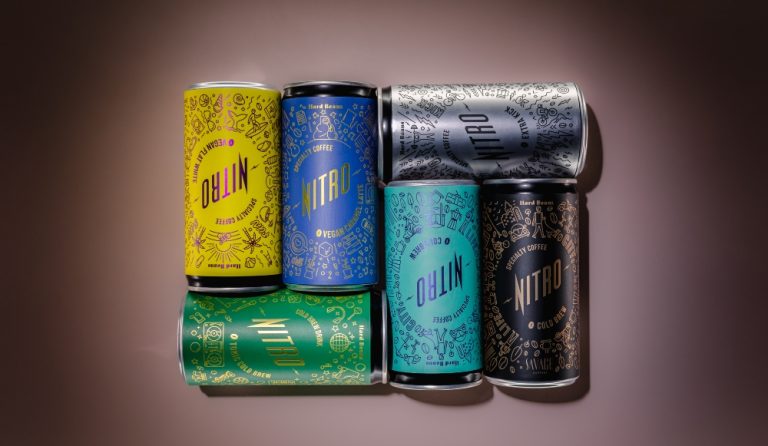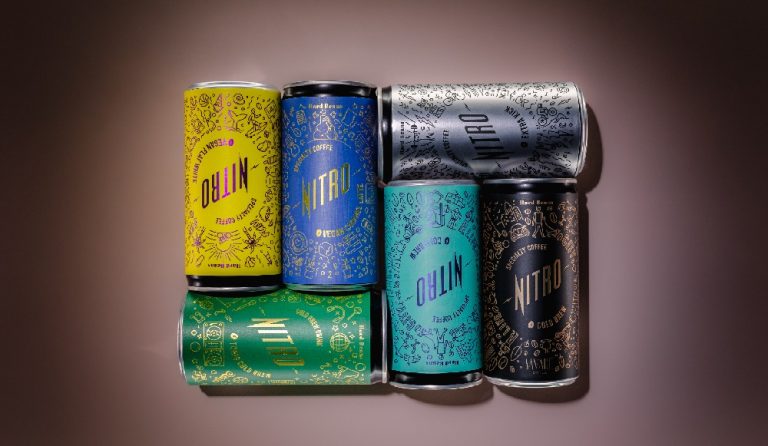


RTD nitro coffee presents an excellent opportunity for coffee businesses to expand and stratify their product portfolio while also appealing to younger consumers who are increasingly looking for convenient coffee on the go.
This is because cold brew is already a popular beverage across specialty and commercial coffee markets, and many consumers are opting for RTD coffee instead of soda or energy drinks.
By infusing cold brew coffee with nitrogen, coffee businesses have developed a novel product: nitro coffee, which is ideally suited for RTD packaging. Nitrogen naturally calms acidic and bitter-tasting notes while creating a foamier, richer mouthfeel and a unique cascade effect when poured.
Alongside this, some RTD coffee products offer far longer shelf lives than alternative methods of brewing and drinking cold coffee. But despite what you might expect, it isn’t the nitrogen that guarantees this.
We spoke with Dr Steffen Schwarz, Managing Director of the Coffee Consulate in Mannheim, Germany, to learn more about how businesses can make RTD nitro coffee shelf-stable and what this means for businesses.

What is RTD nitro coffee?
RTD (ready-to-drink) nitro coffee is canned cold brew coffee that has been infused with nitrogen during the manufacturing process.
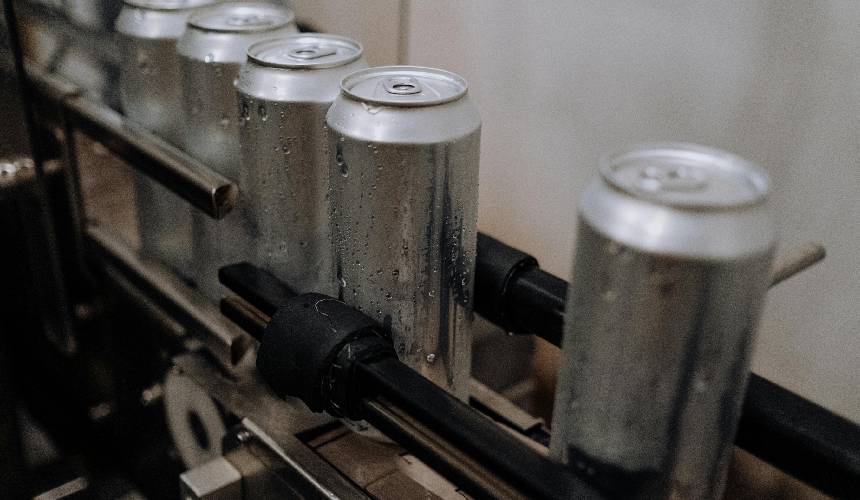
Once the cold brew has been prepared, it is canned as an RTD beverage. Canning the product in the correct conditions greatly increases its shelf life. In some cases, manufacturers can guarantee up to 12 months. This is in comparison to a maximum of a few days when cold brew is prepared and stored in a coffee shop.
Regular RTD cold brew is first produced in large batches and then poured into individual sterilised cans. At Hardtank, following filling and sealing, our cans are pasteurised, a heat-treatment process that destroys microbial organisms and improves product safety.
When pasteurised correctly, RTD cold brew can then be stored for months without the need for cold chain storage.
Many of the steps for preparing RTD nitro coffee are precisely the same. The key difference in the process is the addition of nitrogen, most commonly in the form of nitrogen dosing – a drop of liquid nitrogen is added on top of the liquid cold brew immediately before the can is sealed.
Steffen describes the process as “creating a smoother and creamier texture than a normal cold brew and enhancing the sweetness of the beverage”.
He adds: “It has a texture like Guinness or British beers that are tapped with nitrogen instead of the more common carbon dioxide.”
Pasteurisation – essential to success and safety
Nitrogen flushing enhances the safety and performance of packaged foodstuffs, especially those set for ambient storage and display – at room temperature.
However, pasteurisation is the most crucial phase for extending the shelf life of RTD cold brew and RTD nitro coffee. Cold brew coffee is mildly acidic – typically with a pH greater than 5. This means it has some natural preventive properties to stop microbial growth but not enough for total safety.
Both high and low temperatures effectively destroy microbial growth. Therefore, cold brew manufacturers can employ either pasteurisation or cold storage techniques to improve shelf life.
A coffee brand developing RTD cold brew has two options for storage environments – ambient (room temperature) or cold chain. However, cold chain storage is much more costly as it requires a temperature-controlled warehouse and transportation, all of which only guarantee a shelf life of a few days once the product arrives at the retailer. This is logistically challenging and extremely expensive – not to mention fraught with risk if the cold chain fails at any point.
The cold chain removes the requirement for pasteurisation post-sealing but introduces many other risk factors; in order to remain safe for consumption, the product must be kept at consistently low temperatures, from production at the facility to transportation to retail display.
The alternative, pasteurisation, exposes the sealed cold brew can to a high temperature, killing potential microbes and allowing for ambient storage, transport and display. Preservatives can also be used, but they add a non-natural element to a product that many are choosing for its lack of additives. They also may require a lower pH to control microbial growth effectively.
So, what does nitrogen do?
The use of nitrogen when canning RTD cold brew has a number of effects. Outside of coffee, nitrogen flushing is widely used by food manufacturers to package all sorts of food.
Many coffee roasters use this process when packaging their coffee beans and espresso capsules to preserve flavour and slow quality-degrading oxidation.
Nitrogen flushing an aluminium can or any other food packaging receptacle forces oxygen out because the heavier nitrogen gas sinks and replaces other gases.
Mitigating risks in cold brew coffee production
Food-borne microorganisms are understandably a concern for customer-facing businesses, and compliance with safety regulations is essential to keep customers safe. In fact, the recent high-profile recall conducted by cold brew manufacturer Snapchill is evidence of the real risks you can face when manufacturing cold coffee en masse.
Brands creating or selling RTD beverages must have the required expertise and understanding of safely preparing, packaging, and transporting their products.
Building the safest, highest-quality facilities for RTD production is expensive and technically complex, so many brands are opting to work with manufacturers who offer private label or custom formula beverages instead of bootstrapping on their own.
At Hardtank, where we offer private label RTD nitro coffee, we retain a sample of every batch of cold brew we produce and send it to an independent laboratory for regular testing. We also keep a sample of every batch in storage for the duration of its shelf life to ensure safe product performance.

Choose a reliable partner with certified expertise
For safe, shelf-stable RTD nitro coffee, coffee brands should consider partnering with a private label manufacturer with the necessary equipment and safety standards. Sterilisation and pasteurisation are essential to providing ambient cold coffee products with an extended shelf life, and they must be conducted expertly to mitigate all risks truly.
The ideal manufacturing partner should offer its clients complete peace of mind with regard to the safety and shelf performance of their products – as the expert, with the dedicated facilities, equipment and technology, it is incumbent upon them to put their clients at ease so that they can focus on brand development and customer satisfaction.
Hardtank has over twenty years of experience in specialty coffee and BRC-certified facilities with the highest food-safety standards, specifically for the production of cold brew coffee.
By partnering with Hardtank, you ensure safe, high-quality RTD cold brew and RTD nitro coffee with the shelf-life range required for market success. To find out more about creating your own line of RTD nitro coffee, visit our website or contact us directly.
Also, make sure you sign up for our newsletter to stay up-to-date with the latest developments in nitro and RTD.
RTD nitro coffee