

In this article, you’ll learn:
- Why a cold brew menu holds its place once the weather turns
- Which autumn flavours a cold brew menu should test beyond pumpkin
- How cafés keep a cold brew menu small, consistent, and quick to serve
Every autumn, cafés feel pressure to turn their entire menus orange. Yet some cafés find that customers continue ordering cold drinks as temperatures drop. That creates an opportunity to build an autumn cold brew menu with more personality than a seasonal syrup alone. That opens the opportunity to build an autumn cold-brew menu with real personality.
To learn more, we spoke to Bretton Lammi of Un Deux Trois Café at The Plaza at Pinnacle Hills in Rogers, Arkansas. His approach covers base recipes, flavour direction, service realities, and menu size. Together they shape a cold brew menu that feels seasonal without copying everyone else, and still runs strong all year.

Why does a cold brew menu belong on an autumn list?
Because demand for cold drinks no longer stops in October. Cold brew now sells as an everyday staple, and seasonal features work best when they build on it.
The idea that cold brew belongs to summer is fading fast. The global cold brew coffee market reached USD 1.73 billion in 2024, according to IMARC Group, which ties growth to demand for premium drinks and grab-and-go formats. Those habits do not switch off in October.
Starbucks offered an early signal. Its pumpkin cream cold brew outsold its pumpkin spice latte in 2020, CNBC reported, as customers kept ordering cold drinks despite cooler weather.
For independent cafés, the lesson is simple: a cold brew menu is not a seasonal gamble. Lammi describes how Un Deux Trois Café approaches it:
“Cold brew is part of our everyday menu at Un Deux Trois Café rather than something we offer only in summer. We keep traditional cold brew available alongside coconut water and orange juice variations, giving guests a few different options throughout the year. Our fall features add to that existing menu.”
For context, the variations he mentions are the café’s Coco Brew and Sunshine Brew, which sit on its everyday menu beside the traditional Cold Brew.
Which autumn flavours should a cold brew menu test beyond pumpkin?
Apple, caramel, chai, and warm spices are all worth testing in cold drinks. Each offers a different way to move beyond pumpkin, provided the flavour works with the coffee and holds its balance over ice.
Pumpkin spice is not disappearing, but its dominance is loosening. In a September 2026 CNN report, Datassential data showed that 99% more coffee establishments sold apple pie flavours than a year earlier, and 49% more sold caramel apple. Pumpkin spice lattes grew by only 37%. The same report notes that 86% of consumers have already tried a pumpkin spice latte, which helps explain why novelty is moving elsewhere.
Chai is another option for cafés looking to broaden their autumn menus. Its spice profile offers a familiar seasonal direction without relying on pumpkin as the central flavour.
Un Deux Trois Café shows how a single operator can widen its range: “We have taken a broader approach to seasonal beverages rather than making everything pumpkin-flavoured. Our Halloween selections included white chocolate, spiced brown sugar and caramel in Spooky Spice Latte; apple and cinnamon in Apple Jack-o’-Lantern Chai; and peach cold foam over ceremonial-grade matcha in Trick-or-Peach Matcha. Those are separate from our cold brew offerings, but they show how different coffee and tea bases give us room to offer more variety.”
Although these seasonal drinks sit outside Un Deux Trois Café’s cold brew menu, they illustrate the café’s broader approach to flavour development: using different beverage bases to create variety without relying on pumpkin alone.
Once the base is solid, flavours should complement the coffee rather than bury it. Lammi frames the starting point simply:
“Start with good coffee and choose ingredients that complement it. Our Coco Brew and Sunshine Brew are simple examples of taking cold brew in different directions. For fall, brown sugar, caramel, or warm spices are flavors I would consider testing. Keep the selections manageable and make sure each drink tastes as good in service as it does during development.”
Texture shapes the result as much as the syrup does. Cold foam can add flavour and texture without requiring the entire drink to be sweetened. Used carefully, it can complement the coffee without overpowering it. Build a spiced syrup with cinnamon, cardamom, or nutmeg, then dose it lightly so the cold brew stays the main event.
Fruit and cream also change a drink’s character in ways pumpkin rarely does. A bright component such as apple or pear can contrast with cold brew’s flavour profile, while a creamy layer can add body and soften the perception of bitterness. The balance will depend on the coffee and the finished recipe.
Finally, build contrast into the cold brew menu. If one drink runs rich and dessert-like, make the next lighter and more refreshing, so guests choose differently on each visit. Naming matters too. Descriptive, seasonal names help guests understand a drink quickly, which shortens ordering time and helps customers find autumn coffee options online.

How can cafés keep a cold brew menu focused and consistent?
Test every drink under real service conditions, then hold the list short. A few limited-time features beside familiar staples serve regulars and newcomers alike.
A flavour idea is only as good as its execution on a Saturday rush. Before anything reaches the menu, it should pass a short checklist that protects both quality and speed. Lammi’s list is brief and disciplined:
“For me, flavor, balance, and consistency come first. Guests should still be able to taste the coffee or tea, and the team needs to be able to make the drink consistently during a busy service. With cold brew, I would also consider how the drink tastes over ice and how that balance changes as the ice melts.”
Turning that philosophy into practice starts with testing under real conditions. Taste every candidate at the first sip, halfway through the drink, and near the bottom of the cup. A syrup that seems restrained at first can turn thin or cloying as the ice melts. Measure sweetener and flavour additions by weight or fixed pump counts, so a new barista matches a veteran.
Time the build, too. A drink that adds more than a few steps will slow the line and invite variation. Run the recipe with a second team member during development, because the person who designed it rarely makes it at peak hours.
A larger cold brew menu is not automatically a better one. Every extra drink adds ingredients, training time, and waste, and it can dilute the identity of the café. Lammi’s closing thought makes a strong case for restraint:
“Not every drink needs to change with the season. Keeping familiar options available while adding a few limited-time features gives regular guests a choice and others a reason to try something new.”
In practice, choose a small number of features and give each one a clear role. One serves as the approachable entry point for guests who want something familiar with a seasonal twist. Another serves the adventurous crowd. A third bridges hot and cold formats for guests who change their minds with the weather.
Plan for ingredient overlap, so that a single spiced syrup or foam base can serve several drinks. That reduces inventory pressure and simplifies training.
Set a clear end date as well. Limited-time offers create urgency, and they let a café review sales afterwards to decide what deserves a permanent place. Track which drinks guests reorder, and which they try once and abandon. That feedback beats instinct when next season’s planning begins.
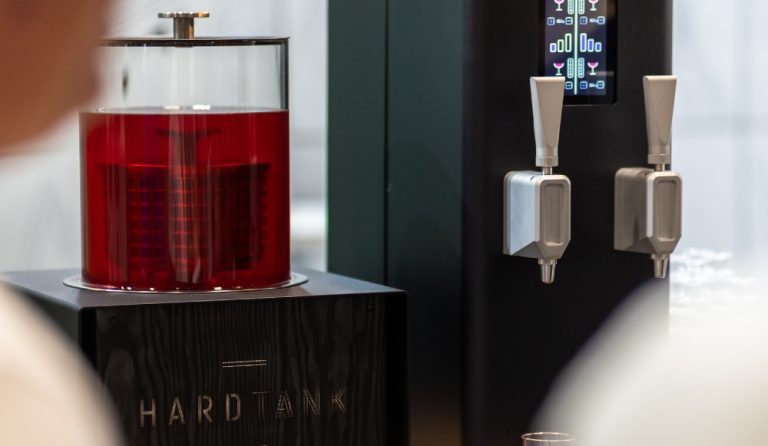
Capacity determines whether the plan holds up during a busy service. Cafés need enough cold brew for their core menu and any seasonal drinks built on the same base. Hardtank’s equipment can shorten the extraction cycle compared with traditional immersion methods, helping cafés plan replenishment more efficiently. The Hardtank 20 is designed for higher-volume production, while the Baby Hardtank offers a more compact option. A consistent base also makes every syrup, spice, and foam easier to judge.
An autumn cold brew menu does not need one flavour at its centre to feel seasonal. Start with a strong coffee, protect the balance that makes cold brew appealing, and test ideas under real service conditions before they go live. Look beyond pumpkin to apple, chai, caramel, and warm spices, and leave the base drinks your guests already love in place. Keep the line-up small enough to execute well, and treat each limited-time drink as a conversation starter.
Whatever the season brings, the coffee underneath has to hold. See how Hardtank brews it.
Cold brew menu: Key takeaways
- Cold brew works as a year-round staple, so autumn features should build on it rather than replace it.
- Pumpkin spice still has fans, but apple, chai, caramel, and warm spices now give operators a way to stand out.
- Test flavour, balance, and consistency before launch, and judge each cold brew over ice and as it dilutes.
Cold brew menu: FAQ
Is cold brew still popular in autumn and winter?
Yes. Demand for cold drinks continues through cooler months, and many cafés now keep cold brew on the menu year-round.
Which autumn flavours work besides pumpkin spice?
Apple, caramel apple, apple pie, and chai are all gaining momentum. Brown sugar, caramel, and warm spices also make reasonable starting points for cold brew testing.
How should a café test a new drink for its cold brew menu?
Taste it fresh, halfway through, and at the end of the cup to see how dilution changes the balance. Then confirm the team can make it consistently during a busy service.
Want an autumn menu your café can actually run?
- See the systems: discover why cafés choose Hardtank.
- Go compact: meet the Baby Hardtank Nitro Set
- Speak to the team: schedule a free consultation.
Photo Credits: Jason Hudson