

In this article, you’ll learn:
- Why cold coffee trends now run through every season, not just summer
- Which autumn flavours and textures are shaping iced menus in 2026
- How cafés test cold coffee trends with pop-ups, collaborations, and hot-or-iced options
Pumpkin lattes still dominate autumn headlines, but the more interesting story is unfolding over ice. Some cafés are finding that customers continue ordering cold drinks as temperatures drop, creating opportunities to explore seasonal flavours beyond traditional pumpkin spice. For operators, the question is how to adapt cold coffee menus to their own customers and trading conditions.
To see what that looks like on a working menu, we spoke to Luigi DiRuocco, Vice President and Co-Owner of The Caffè by Mr. Espresso. The family-owned Oakland roaster runs the cafe, where rotating chef collaborations test new cold drinks through the season. Let’s dig into the cold coffee trends defining autumn 2026 menus, and what café owners and roasters can take from his approach.

Why cold coffee is now a year-round category
The numbers back up what baristas see at the counter. The National Coffee Association’s Fall 2026 report, fielded in June 2026, found that 21% of past-day coffee drinkers had cold coffee, compared with 71% who had hot. In January 2026, the split was 17% cold and 78% hot; in 2022, cold sat at 16%.
Datassential reports a similar trend in menus: cold and frozen formats reached 51.7% of away-from-home coffee occasions in June, up from 43.7% a year earlier, while hot brewed coffee slipped nearly 10 percentage points to 31.4%. The two figures measure different things, but both point to the same cold coffee trends.
Luigi DiRuocco, Vice President and Co-Owner of Mr. Espresso, sees the same pattern. “Cold coffee isn’t just for summer anymore. More customers are enjoying iced beverages year-round, and we are seeing seasonal flavors become a bigger part of that.”
Supply is following these cold coffee trends. Datassential captured 261 non-alcoholic coffee drink launches in the first half of 2026, nearly double the 136 recorded a year earlier. It also found that cold brew’s share of convenience-store coffee occasions rose to 32% in 2025 from 15% in 2019. For operators, the iced menu has moved from a warm-weather add-on to a core, all-season line.
Autumn flavours for iced coffee that go beyond pumpkin spice
At The Caffè by Mr. Espresso, autumn flavour development extends beyond traditional pumpkin spice, with iced drinks providing a canvas for more unexpected combinations. DiRuocco describes the shift this way: “We are seeing more interest in seasonal flavors that go beyond traditional pumpkin spice, with ingredients like apple, sweet potato, warming spices, and chocolate making their way into coffee drinks in new and creative ways.”
At The Caffè by Mr. Espresso in Oakland, that curiosity takes shape through rotating chef collaborations. The Bussdown, created with Chef Mike Woods, is a toasted-marshmallow-candied-yam latte. White Choke-Late layers roasted sunchokes, white chocolate, cream cheese, and fresh orange zest.
Cold foam and texture: the next layer of iced coffee
Flavour is only half the story. Texture is another area attracting attention in cold coffee, with cold foam and creamy toppings giving cafés more ways to differentiate iced drinks. Spate, a trend analytics firm, reported that interest in cold foam rose 73.2% year on year, based on a combined index of US Google Search and TikTok views from August 2024 to July 2025. TikTok growth alone reached 104.7%, and Spate projects a further 25.5% increase heading into 2026.
DiRuocco agrees that mouthfeel matters. “Texture is also playing a bigger role, with cold foams and creamy toppings adding something extra.”
His team’s upcoming Brundo Spice collaboration, running from 26 October to 7 November, puts the idea into practice. It is an Ethiopian Berbere spice mocha made with Coracao Chocolate, finished with vanilla cold foam and black cardamom. The foam softens the heat of the spice blend, while the cardamom adds aroma before the first sip. “It’s a way to introduce richer, seasonal flavors while still offering the cold coffee experience customers enjoy.”
Building a cold autumn menu with pop-ups and hot-or-iced options
Events can make a cold menu feel like part of the season rather than an afterthought. The Caffè has partnered with a run of local partners this autumn. Whisk Creations contributed an apple pie cake with salted caramel buttercream and apple compote, Town Biscuits served sweet potato biscuits with cinnamon butter, and an upcoming pop-up with Poesia Cafe will feature autumn pastries and Pumpkin Maritozzi. Each collaboration gives a cold drink a natural food pairing and a reason to visit again. Pop-ups also let a café test cold-coffee trends without committing to a permanent menu slot.
Flexibility on the menu matters just as much. DiRuocco explains the approach: “We also make a point to offer seasonal drinks hot or iced when possible, like The Big Apple, our spiced apple latte created with Chef Nelson German, so customers can enjoy these flavors however they prefer.”
Offering both temperatures also simplifies inventory, since one syrup or spice component serves two drinks.

Advice for cafés planning cold drinks for cold weather
Designing iced drinks for chilly months can feel counterintuitive, yet DiRuocco keeps the guidance simple: “We’d say focus on the flavors rather than the temperature. Just because the weather cools down doesn’t mean people stop ordering iced coffee.”
Housemade syrups, warming spices, and creative toppings are the practical tools. Test each one against the coffee itself, because cold temperatures mute some aromatics and amplify others. Sweetness, in particular, reads differently over ice, so small tasting rounds before launch pay off. Those rounds matter more as cold coffee trends lean harder on spice and sweetness.
The coffee underneath deserves equal attention. “Quality coffee should always be the foundation, and the added flavors should complement it rather than overpower it.” Mr. Espresso keeps its oakwood-roasted espresso at the centre of every drink, even when the supporting ingredients are unconventional. Roasters and cafés sourcing for iced menus should think the same way, choosing beans and roast profiles that hold their character through milk, spice, and ice.
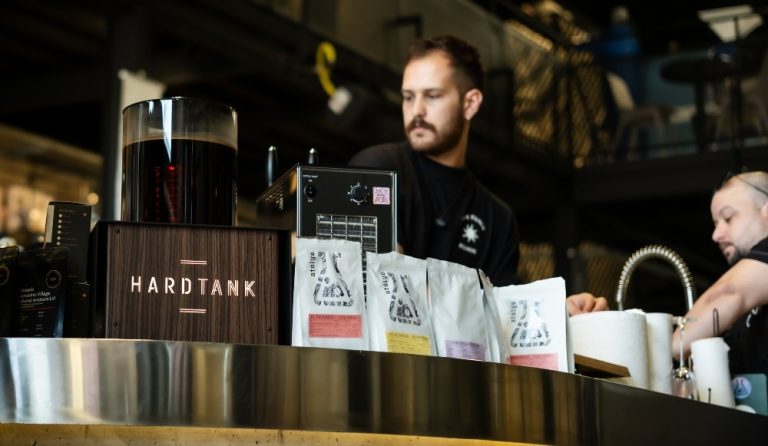
A rotating cold menu also needs a dependable base. Hardtank builds sealed, pressurised brewers for that job, with the Hardtank 20 for higher-volume service and the Baby Hardtank for smaller sites. Both systems support faster cold brew production than traditional immersion methods, helping cafés prepare a consistent coffee base for seasonal menu trials. A dependable base also makes it easier to assess how each spice, syrup, and foam works with the coffee. A consistent cold coffee underneath also makes every spice, syrup, and foam easier to judge.
Craft, community, and tradition behind seasonal menus
Cold coffee trends travel fastest when they are rooted in identity. Mr. Espresso is a family-owned Oakland company with Italian roots, and its autumn programme includes work with local businesses such as Oaktown Spice Shop, which is celebrating its 15th anniversary. DiRuocco frames the philosophy plainly: “For us, seasonal menus are about finding a balance between creativity and tradition.”
Local partnerships also give cold drinks a story to tell. “It’s also an opportunity to bring people together and support the local businesses that make our community special.”
Cold coffee is becoming an increasingly relevant part of autumn menu planning. Consumer research, new product launches, and interest in cold foam offer useful signals for cafés exploring how to adapt their menus as the weather changes.
The cafés best positioned to benefit are those that lead with flavour, thoughtfully add texture, test ideas through collaborations, and keep the quality of the coffee front and centre in every cup they serve. Whether the inspiration is apple, chocolate, or a Berbere spice blend, the principle holds: give customers something worth sipping through every season, and the temperature outside becomes a minor detail for everyone.
Whatever the flavour of the season, the coffee underneath has to hold up. See how Hardtank brews it, or talk to the team about your menu.
Key Takeaways
- Cold coffee trends now run year-round, with 21% of past-day coffee drinkers choosing cold in 2026, up from 16% in 2022.
- Seasonal flavour, not temperature, drives the cold coffee trends that keep iced drinks relevant as the weather cools.
- Texture, led by cold foam, now works as a second flavour layer on iced menus.
- Chef collaborations, pop-ups, and hot-or-iced options give cafés low-risk ways to test autumn cold coffee trends.
- Quality coffee must remain the foundation, with added ingredients complementing it rather than covering it.
FAQs
Is cold coffee still popular in autumn and winter?
Yes. The National Coffee Association’s 2026 data shows 21% of past-day coffee drinkers had cold coffee, up from 16% in 2022, and cafés report iced orders continuing as temperatures fall.
What autumn flavours work best in iced coffee?
Apple, cinnamon, chocolate, sweet potato, and warming spices are leading examples, often paired with creamy toppings that add richness to cold drinks.
What is cold foam and why is it trending?
Cold foam is a chilled, frothed milk topping that adds texture and visual appeal, and it sits at the heart of this year’s cold coffee trends. Spate reports cold foam interest grew 73.2% year on year in its combined search and social index.
How can cafés build a cold menu for cold weather?
Offer seasonal drinks hot or iced, use housemade syrups and spices, add textural toppings, and keep quality coffee at the centre so flavours complement rather than overpower it.
Want to build a cold menu that sells all year?
- See the systems: discover why cafés choose Hardtank.
- Go compact: see the Baby Hardtank Nitro Set
- Speak to the team: schedule a free consultation.