

In this article, you’ll learn:
- How long fresh cold brew lasts in a café, and what sets that limit
- How long cold brew lasts across tap, bottle, pouch, and canned formats
- How cafés extend shelf life and cut waste
Freshly brewed cold brew coffee remains a delicate beverage whose storage during and after production makes nearly all the difference to both its taste and safety. As with any perishable product, careful handling preserves and even extends its shelf life, though that demands real precision.
Beyond safety and quality, that care builds consumer trust and carries real economic value. It protects profitability by minimising waste, disposal costs, recalls, and other related losses.
Mihai Panfil is founder and Q grader at Origo Coffee in Bucharest, Romania. We asked him a direct question: how long does cold brew last in a working café? Read on for his insights.

How long does cold brew last in a café?
Fresh cold brew lasts up to a week below 5°C, and under 24 hours at room temperature.
Preserving cold brew’s shelf life starts right at the preparation and brewing stage. Brewing without boiling water leaves it more vulnerable to bacterial and mould growth. Chemical changes that deteriorate sensory qualities can also occur at this stage.
Mihai shared how Origo handles storage from the start. “Each batch is extracted in the HT20 under controlled parameters, then evaluated through TDS and pH measurements, sensory analysis, and laboratory testing,” he says.
The beverage only reaches sanitised packaging once it passes those tests. From there, Mihai adds, it is “labelled with the production date for full traceability, and moved into refrigerated storage.”
A joint study by Hard Beans and the Institute of Biotechnology at the University of Opole examined how refrigeration affects shelf life. It found that cold brew stored below 5°C stays stable against microbial growth throughout its normal shelf life. Mihai follows the same limit.
“We monitor storage temperatures, rotate stock according to production date, and track when each container is opened,” he explains. “After opening, the product must be kept refrigerated between 2°C and 8°C.”
These steps play a significant role in preserving shelf life, and in meeting safety regulations. In the same study, cold brew stored at room temperature lasted under 24 hours. Below 5°C, it lasted up to a week.
For Origo Coffee, it lasts slightly longer than that. “All our cold brew formats have a refrigerated shelf life of 21 days while unopened, calculated from the production date printed on the packaging,” Mihai shares.
With microbial stability under control, sensory qualities usually settle the question of how long does cold brew last. Once the taste and aroma start slipping, shelf life drops fast, which is why Mihai evaluates every serving closely.
To him, the sensory profile has the final say. “If the cold brew no longer shows the clarity, sweetness, and complexity intended for that recipe, we do not serve it,” he adds. Other factors, such as roast profile and oxidation, also shape shelf life, according to research.
How long does cold brew last in different formats?
Unopened RTD cold brew keeps for up to 21 days refrigerated, while fresh cold brew on tap lasts about a week.
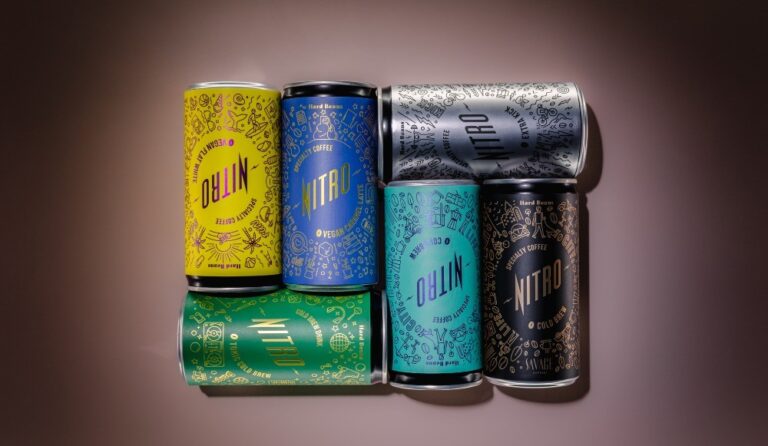
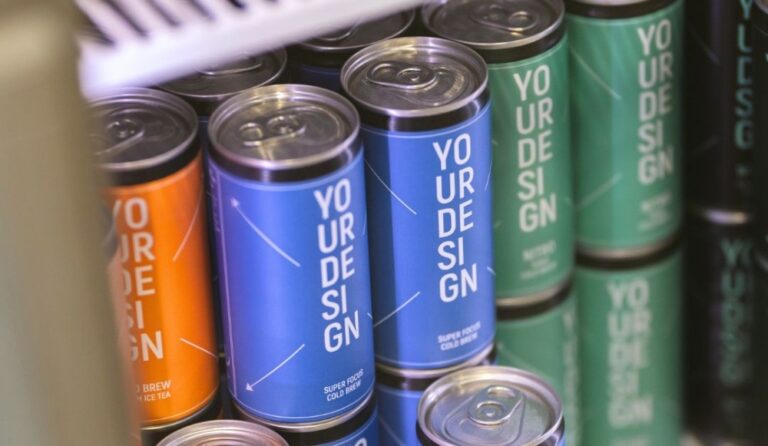
Cold brew can be as versatile as you want it to be. Cafés serve it still, infused with nitrogen or carbon dioxide, or in a range of formats. “We offer cold brew as a ready-to-drink product,” Mihai says of the option Origo settled on.
In its early years, cold brew mostly arrived fresh on tap, usually from a concentrated extract. As consumers increasingly prioritised convenience, RTD cold brew products grew in popularity.
All of Origo’s RTD formats share the same unopened shelf life, Mihai explains. “Every unopened pack has a refrigerated shelf life of 21 days from the production date printed on the packaging.”
So how long does cold brew last once a pack is opened? Exposure to oxygen, light, and heat triggers oxidative damage. Sensory qualities then decline, through loss of freshness, colour fading, and off-flavours.
Mihai explains how this plays out across Origo’s RTD range. “Our Origo bottled cold brew keeps for up to five days at 2–8°C, while the Brewzeus pouch should be consumed within 48 hours and stored within the same temperature range.”
Packaging can help protect cold brew from oxygen and light, but the resulting shelf life also depends on the beverage formulation, processing method, packaging integrity, and storage conditions. One study found that advanced pasteurisation boosted the antioxidant properties of cold brew. Research on high hydrostatic pressure (HHP) processing has demonstrated potential to extend cold brew shelf life while preserving sensory quality under the conditions tested.
The earlier Hard Beans study made the comparison plain, with temperature, safety, roast profile, and storage held constant. Unpasteurised cold brew on tap, in a pressurised keg system or sterilised containers, lasts only up to a week. Unopened RTD formats stay fresh for up to three weeks, as Mihai confirms.

How can cafés extend cold brew shelf life and reduce waste?
Cafés extend shelf life through roast choice, filtered water, tested parameters, unbroken refrigeration, and batch sizes matched to demand.
Cold brew’s shelf life is only as good as its quality and safety. Every stage of production shapes both. Roast profile can influence cold brew’s shelf-life performance. In the study discussed above, results differed between samples prepared from different roast levels, highlighting the importance of evaluating each formulation under its intended storage conditions.
Water matters just as much. “We rely on filtered water,” Mihai says. To confirm the formulation delivers, test key parameters at every stage, alongside proper storage and temperature control. Mihai lists “systematic pH and TDS measurements, hygienic packaging, laboratory testing, and uninterrupted refrigerated storage” as critical to the process.
Where demand fluctuates, wastage becomes more likely with traditional systems that can take half a day to a full day to prepare a single batch. An alternative is cold brew machines that produce larger batches in under an hour and scale volumes as demand rises.
That should leave you with inventory that is easier to manage. Mihai’s approach centres on clear, consistent records. “Clear production dates and after-opening instructions also help our teams and customers manage the product responsibly,” he shares.
A clear understanding of his target market also helps Mihai choose packaging formats that better match demand and reduce waste. “A 3-litre bag-in-box for higher-volume coffee-shop service, bottles for retail and sharing, and a 250 ml pouch for individual consumption,” he explains.
Equipment also plays a huge role in safety, quality, and compliance. For Mihai, his choice has proved well worth it. “We use the HT20 to brew in a sealed, pressurised environment, which minimises oxygen exposure and helps preserve the coffee’s clarity and sweetness.”
That effectiveness extends to how the machine operates. “It also allows us to calibrate temperature, extraction time, and agitation for each coffee, instead of applying the same recipe to every origin,” he adds. Filtration helps remove coffee particles, while sanitation programmes support consistent equipment hygiene. These measures form part of the wider process used to manage product quality and food safety, alongside appropriate testing and documented evidence for compliance.
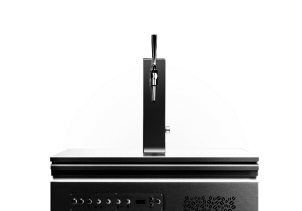
Every piece of Hardtank equipment works this way. Both the Hardtank 20 and the Baby Hardtank use a closed chamber. The closed chamber helps control the extraction environment and limit exposure during brewing. Its contribution to the finished beverage’s shelf life depends on the wider production, sanitation, packaging, and storage process.
How long does cold brew last: Key takeaways
- Fresh cold brew holds for up to a week below 5°C, and for under 24 hours at room temperature.
- Unopened RTD formats last around 21 days refrigerated, but only days once a pack is opened.
- Sensory decline, rather than microbial growth, usually ends a cold brew’s usable life.
Want cold brew that holds its quality for longer? Explore Hardtank equipment, or schedule a free consultation.
How long does cold brew last: FAQ
How long does cold brew last in the fridge?
Fresh cold brew lasts up to a week below 5°C. At Origo Coffee, unopened RTD packs keep for 21 days, while an opened bottle lasts five days and an opened pouch lasts 48 hours.
How long does cold brew last at room temperature?
Under 24 hours, according to the Hard Beans and University of Opole study. Low acidity and a low brewing temperature leave cold brew exposed to microbial growth once it warms up.
How long does cold brew last once you open the pack?
Days rather than weeks. Oxygen, light, and heat can accelerate sensory deterioration, while inadequate refrigeration and poor hygiene can compromise microbial safety. Roast profile and formulation can also influence shelf-life performance, so storage guidance should be based on the specific product and its validated conditions.
Want to brew cold coffee that lasts?
- See the systems: discover why cafés choose Hardtank.
- Go compact: meet the Baby Hardtank.
- Speak to the team: schedule a free consultation.