

In this article, you’ll learn:
- What to check before choosing a cold brew keg system
- How nitrogen changes cold brew, and which businesses it suits
- When CO2 makes the better choice for a cold brew keg system
Nate Armbrust, a food scientist at Stumptown Coffee Roasters in the US, played a major role in developing modern nitro coffee. His work helped establish nitrogen as a way to change cold brew’s mouthfeel, texture, and visual presentation.
Independent craft coffee makers, meanwhile, kept experimenting with direct CO2 infusion in cold brew. Just over a decade has passed since the concept went mainstream. Each gas has gradually carved out a niche of its own, helped by constant innovation in the equipment.
Those output differences persist, and consumers now appreciate the character of each. Nicola Schäppi is founder and managing director of Coffee Space GmbH, a Switzerland-based specialty coffee roaster. We spoke with him about which gas suits which shop. Read on for his insights.
What should roasters check before choosing a cold brew keg system?
Set a quality benchmark first, then check chilling, gas infusion, flow control, food-grade materials, and cleaning access.
Most traditional cold brew equipment relies on passive diffusion, where extraction can take up to 24 hours. But in studies comparing this to modern alternatives centred on agitation, the latter proved just as effective, if not better, at delivering quality brews in far less time. Hardtank’s patented accelerated cold extraction technology, for example, does so in under an hour.
A cold brew keg and dispensing system stores and serves already-brewed coffee. A typical setup may include chilling for temperature control, gas infusion, flow control for portion size and pour speed, and a dispensing tap.
Whether you plan to use nitrogen or CO2, Nicola says these components should be in place from the start. “From an equipment perspective, the same fundamentals apply regardless of gas choice.”
Cold brew requires careful food-safety controls because it is extracted without the microbial reduction associated with hot brewing, while its composition and production process can allow microorganisms to survive or grow if handling and storage are not properly controlled. That makes material compatibility a serious matter on the equipment side.
“Stainless steel lines, proper seals, and food-grade everything,” Nicola lists as the qualities to watch for. Effective cleaning and sanitation matter just as much. “A tap system is only as good as your cleaning protocol,” he explains. “If you can’t break it down and sanitise it thoroughly on a regular schedule, don’t install it.”
Know all these requirements before investing in a cold brew keg system. “Set a quality benchmark before you buy a single piece of equipment,” Nicola advises.
When exploring the options, favour proven equipment over promising new systems that carry maintenance and reliability risks. “Start with proven, standard gear,” he continues. “Fancy custom hardware is tempting, but it creates dependency.”
When does nitrogen make sense in a cold brew keg system?
Nitrogen suits high-volume cafés that want a creamy, sweeter pour and the visual theatre of the cascade.
Cuvée Coffee reportedly brought the first nitrogenated coffee to market, back in 2011. Nate Armbrust, who refined and mainstreamed the concept, joined Stumptown Coffee in 2013. He dropped the idea of carbonating coffee and focused instead on the right nitro ratio for mouthfeel and flavour.
As Nate told Chemical and Engineering News, many baristas got in touch to ask about nitrogen infusion. Consumers had started praising the texture, taste, and appearance of the resulting beverage. The difference from regular cold brew was stark, which showed how much this gas shapes the sensory experience.
In a properly configured nitro system, nitrogen contributes to the signature cascade and creamy texture that consumers associate with nitro coffee.”Nitrogen produces that signature cascade effect,” Nicola says, “tiny bubbles, a creamy, velvety mouthfeel, and a perception of sweetness that rounds out acidity.” According to him, this is “what most people associate with nitro coffee.”
Consumer preferences keep shifting towards such beverages, especially innovative coffee recipes that are also highly functional. Those factors have driven its rise across restaurant and café menus.
Nitro coffee fits that category, while also delivering a craft beer experience that is already popular. That visual aesthetic can also make nitro coffee particularly suited to bars and cafés where presentation is part of the customer experience, which especially appeals to younger consumers. For Nicola, that makes a nitro cold brew tap hard to get wrong for the right business.
“A classic nitro coffee tap makes sense for high-volume cafés where visual theatre and a creamy cold coffee experience add to the brand,” he explains. Consumers will pay more for that kind of premium experience, so a nitro tap can also lift profitability.

When is CO2 the better choice for a cold brew keg system?
CO2 suits businesses chasing a bright, sparkling refresher that also sells to people who never order coffee.
The sharp rise in non-alcoholic drinking has sparked innovative recipes for a wider range of tastes. One trend defining the space right now is the diversified use of carbonated soft drinks like tonic water beyond the usual gin pairing.
Espresso and lemon tonic are among the creative non-alcoholic pairings found in shops today. Sparkling drinks have been on the rise too. That creates room for more coffee-based sparkling drinks alongside established categories such as kombucha, craft soda, and other non-alcoholic refreshments.
Nicola chose CO2 instead of nitrogen, and points out that it offers a distinct sensory experience many consumers value just as much. He says their coffee refresher system “gives a brighter, more effervescent character,” and describes the flavour and mouthfeel as “crisp, sparkling, aromatic.”
Nitro and CO₂-carbonated cold brew offer entirely different drinking experiences. While a nitro cold brew tap creates a creamy mouthfeel that can make acidity and brightness feel softer, CO₂ carbonation can emphasise aromatics and a more sparkling, refreshing character. “The carbonation lifts the aromatics rather than smoothing them out,” Nicola explains.
“Sensorially, I wouldn’t put our drink in the nitro coffee category at all,” he adds. “It’s closer to a natural cola: refreshing, complex, with the depth of speciality coffee but the drinkability of a soft drink.”
Many commercial soft drinks offer a close experience, which is why Nicola believes CO2-infused coffee appeals to a wider target market. “A sparkling coffee refresher opens doors to customers who don’t drink coffee at all,” he says.
Its drinkability can also open up different menu and retail positioning, placing the drink alongside categories such as kombucha, craft soda, and natural cola rather than only traditional coffee drinks. “It sits on a menu next to kombucha, craft soda, or natural cola, not next to an iced latte,” Nicola adds. “That’s a much bigger addressable market.”
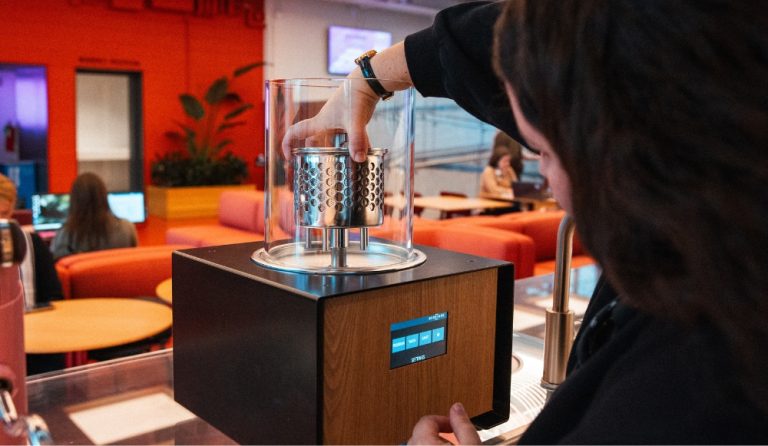
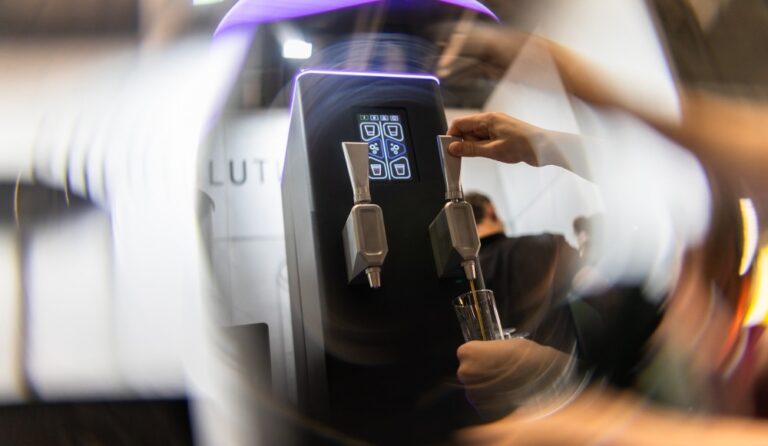
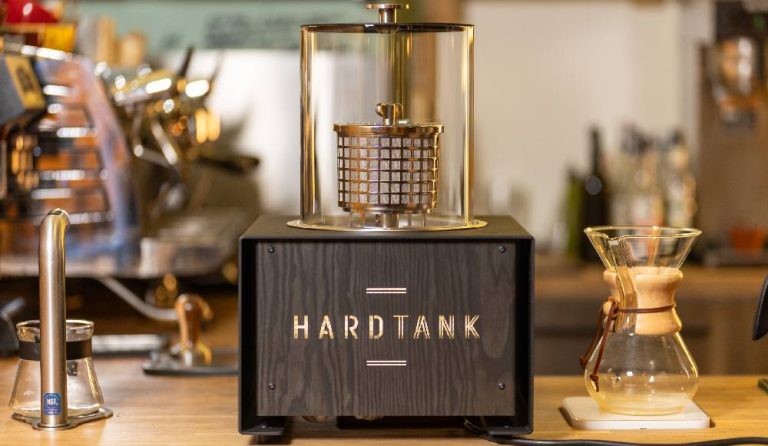
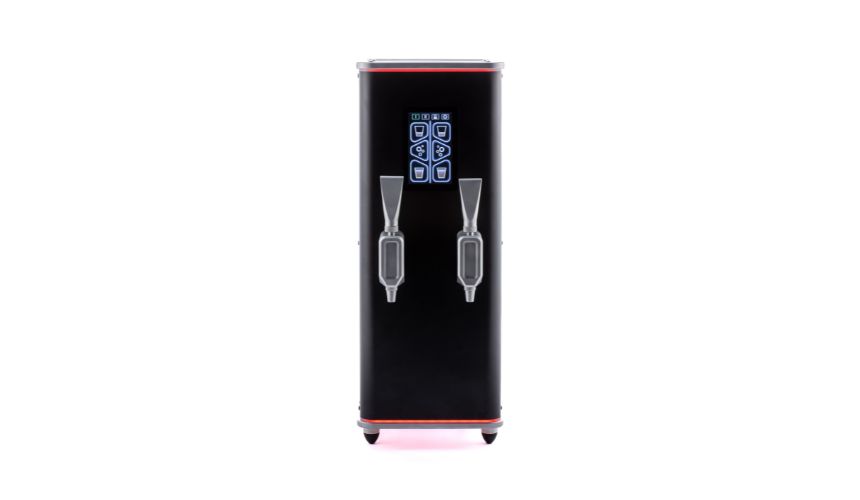
Either gas holds real potential for a business. The foundation for both is equipment tried and tested to deliver consistent results. Every Hardtank machine brews quality cold brew in under an hour. The Hardtank range supports different production and dispensing configurations. The Hardtank 1T and 2T can dispense nitro or CO₂-carbonated coffee through their integrated taps, while the Hardtank 20 and Baby Hardtank pair with the Hardtap for countertop nitro dispensing.
Cold brew keg system: Key takeaways
- Set a quality benchmark and choose proven, easily cleaned equipment before buying any cold brew keg system.
- Nitrogen suits high-volume cafés, delivering a creamy mouthfeel, rounded acidity, and a cascade customers photograph.
- CO2 suits brands chasing a bright, sparkling refresher that sits beside kombucha and craft soda rather than iced lattes.
Ready to serve nitro or CO2-infused cold brew on tap? Explore the Hardtank range, or schedule a free consultation with our team.
Cold brew keg system: FAQ
What is a cold brew keg system?
A cold brew keg system stores and dispenses brewed cold coffee. A typical setup includes in-line chilling, gas infusers, flow control for portion size and pour speed, and a dispensing tap.
Which is better for cold brew, nitrogen or CO2?
Neither wins outright, because they create different drinks. Nitrogen gives a creamy, cascading pour that rounds out acidity, while CO2 lifts the aromatics and produces a crisp, sparkling refresher.
What should you check before buying a cold brew keg system?
Set a quality benchmark first. Then check for stainless steel lines, proper seals, food-grade materials throughout, and a system you can strip down and sanitise on a regular schedule.
Want to put cold brew on tap?
- See the systems: get to know the Hardtank 20.
- Go compact: discover the Hardtap dispenser.
- Speak to the team: schedule a free consultation.