

In this article, you’ll learn:
- Why Nomad Coffee chose a manufacturing partner over an in-house cold brew line
- How Hardtank produces canned cold brew from Nomad Coffee’s own roasted beans
- What the partnership has delivered in cost and consistency
Nomad Coffee has been a fixture of Barcelona’s specialty coffee scene since 2014, when founder Jordi Mestre opened its first shop in El Born. The business grew out of a coffee cart he had run through London’s markets three years earlier.
Today the roastery works out of Poblenou and ships beans to customers in more than 45 countries, built on close relationships with producers and careful roasting. As ready-to-drink coffee gains ground across Spain, Nomad wanted to scale a cold brew line without pulling resources from its core roasting operation. That search led the team to Hardtank.
Cristian Cardona leads purchasing at Nomad Coffee. We spoke with him about why the roastery chose Hardtank and what the partnership has delivered. Read on for his account.

Nomad Coffee had the demand, not the equipment
Nomad saw demand for canned cold brew but lacked the equipment, time, and staff to produce it to its own standard.
Spain’s ready-to-drink coffee category has grown steadily as consumers look for convenient options that still deliver on quality. The segment generated an estimated €148.5 million in combined revenue in 2024, with at-home sales forecast to grow at a 3.34 percent annual rate through 2029. For a roastery with that international reach, a canned cold brew line extends it naturally. The product only had to meet the standard Nomad customers expect.
That was the challenge Nomad faced before finding Hardtank. As Cristian explains, “Before working with Hardtank, we identified the need to produce cold brew. However, we did not have the necessary equipment, time, or personnel to produce the beverages in a way that would achieve the final taste we were looking for.”
Building an in-house cold brew line from scratch would have meant sourcing specialised brewing and canning equipment. It would also have meant training staff on new food safety protocols and dedicating production hours the roastery needed elsewhere.
Cold brew carries its own handling demands too. Cold brew also brings specific food-safety and handling requirements. Because the coffee is extracted without the microbial reduction associated with hot brewing, production, storage, and subsequent processing need to follow appropriate controls. Rather than slow its roasting business to build that expertise, Nomad looked for a partner who already had it.
Nomad keeps control of the coffee
Nomad chose Hardtank because the process starts from beans the roastery roasts itself, rather than a house blend.
For Nomad, the decision came down to expertise and trust in the finished product. The roastery wanted a partner capable of translating its own beans into a cold brew that matched its reputation for quality. For a roastery like Nomad, that means its own coffee remains the foundation of the finished can.
“We decided to work with Hardtank because they had the expertise required to ensure that the cold brew they produced met the expected standards in terms of quality, taste, and aroma, using coffee roasted by us,” Cristian says.
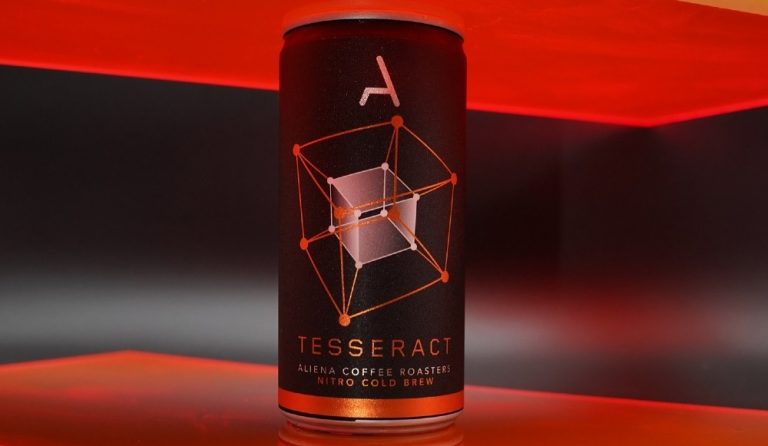
That last point mattered most. Nomad’s identity rests on its roasting, from sourcing at origin to the final cup. Handing off production only made sense if its own coffee stayed at the centre of the drink. Hardtank’s private label process works from a client’s own beans rather than a house blend. It also supports the packaging, nutritional, and technical documentation required to bring the canned product to market. For a roastery like Nomad, that means its own coffee drives the finished can. In this model, “private label” does not mean choosing a generic coffee product. Hardtank works with the client’s own coffee and brand requirements, adapting the production process to create the finished canned beverage.

No new equipment, no additional production staff
The partnership let Nomad add a canned line without buying production equipment or hiring staff to run it.
One of the clearest benefits Nomad found in working with Hardtank was avoiding the investment and staffing costs associated with building an in-house RTD line. Launching an RTD line internally means capital spent on brewing, pasteurising, and canning equipment. It also adds the payroll of running and maintaining that line alongside the existing roastery.
“Thanks to this, we have been able to avoid investments in equipment as well as additional personnel costs,” Cristian says.
That distinction matters for a roastery balancing multiple product lines and an international wholesale business. Instead of tying up capital in machinery for a single format, Nomad directs its investment towards sourcing, roasting, and its Barcelona retail presence. Hardtank handles the specialised cold brew production behind the scenes.
It is a division of labour that lets a roastery add a new category without reshaping its own operations around it.
Nomad Coffee’s real test: production after production
Every batch has matched on taste, appearance, and aroma, giving Nomad confidence in the product as it expands beyond the café counter into wholesale and retail distribution.
Consistency is often the hardest part of scaling a beverage line. A roastery’s reputation rests on customers getting the same experience every time. That holds whether they order a pour-over at the counter or pick up a can on the other side of the world.
“It is also worth highlighting that, production after production, the quality of the finished product, in terms of taste, appearance, and aroma, has always remained consistent. This is something we really appreciate,” Cristian adds.
That reliability matters most once a product moves beyond the café counter into wholesale or retail distribution. At that point a brand has no direct control over how or when someone serves the drink.
For a roastery shipping to dozens of countries, that predictability removes one of the biggest risks of scaling a new category. The reported consistency across production runs helps protect the experience customers expect from Nomad’s coffee.
Nomad Coffee’s experience shows how a specialty roastery can work with a manufacturing partner to carry its own flavour profile into a canned format. By handing off the technical side of production, the team has grown into a new category. That growth has not diverted the time, money, or staff that built its reputation in Barcelona.

Nomad Coffee: Key takeaways
- Nomad Coffee partnered with Hardtank to produce canned cold brew using coffee it roasts in-house.
- Working with Hardtank let Nomad avoid new equipment purchases and additional staffing costs.
- Hardtank’s production process has delivered consistent taste, appearance, and aroma across every batch.
Ready to launch your own canned cold brew? Explore Hardtank’s private label process, or get in touch with the team to talk through your coffee programme.
Nomad Coffee FAQ
Why did Nomad Coffee start working with Hardtank?
Nomad had identified demand for a canned cold brew product but lacked the equipment, time, and personnel to produce it at the quality level it wanted. The roastery turned to Hardtank rather than build that capability in-house.
Does Hardtank use Nomad Coffee’s own roasted coffee for the cold brew?
Yes. Hardtank produces the cold brew from coffee roasted by Nomad, so the finished product reflects the roastery’s own sourcing and roasting profile rather than a generic house blend.
What has Nomad Coffee gained from the partnership?
Two things above all. The roastery avoided the cost of cold brew production equipment and extra staff, and every production run has matched the last on taste, appearance, and aroma.
Want to learn more about private label cold brew?
- Explore private label: see how the Hardtank process works.
- Browse the range: discover our ready-to-drink products.
- Speak to the team: get in touch with Hardtank.